More on the Sandy Starkman Jacket

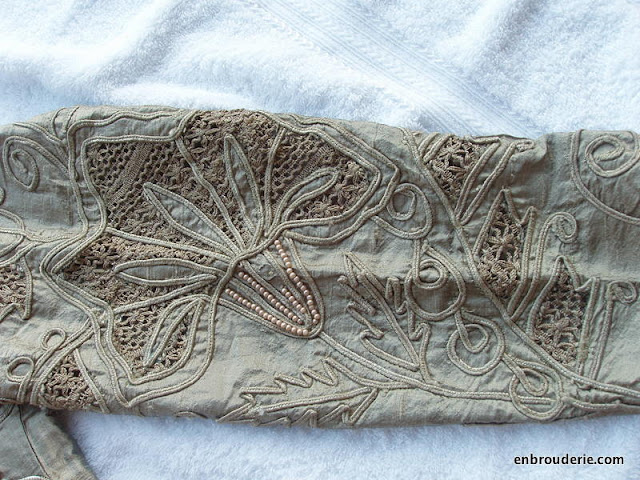
So there were some questions in the comments about how the jacket was worked. I’m guessing it’s a form of needle-lace/needle-weaving, based on similarity to images in the Encyclopedia of Needlework, by Therese de Dillmont (it’s public domain, so it’s widely available online). Here is a closeup of the insertion work on the jacket:

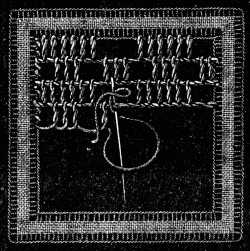
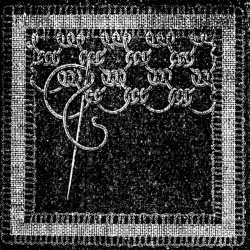
Now here are some images from the Encyclopedia of Needlework (I’ve linked the pictures to their location in the online book), from the section on needle lace. It’s not an exact match, but it’s similar enough that I suspect you could work out how to recreate the lace in the jacket from the chapter in the book. I’m sure there are entire books on the topic, too. If you know of some even more helpful resources, I’d love it if you commented!

Fig. 746

Fig. 718


Fig. 710

Fig. 744

Fig. 722

Fig. 713


Posted in Fashion, Mother | Tagged , , , , | 3 Comments

Needlelace Jacket

My mother is visiting me! She found this wonderful jacket in a thrift store for $7. It’s covered in couched cording and needlelace cutouts. The tag says it is Sandy Starkman, 100% silk, and made in India. Suddenly, I have an intense interest in researching Sandy Starkman and his design company. I will let y’all know what I find!

I thought y’all would like to see closeups of the front.

The sleeves are just as embellished:

Now take a look at the back of the jacket:

I just love the needle lace on this jacket. Here are some closeups of it:

Posted in Fashion, Mother | Tagged , , , , | 9 Comments

Yellow for the Castelo Branco bird

I have settled on yellow DMC satin floss for the main body of the bird. It’s bright and shiny, and very easy to obtain. I’m going to see if I can get a smoother effect with some thread conditioner, and maybe try to use a laying tool. I’ve only started the first layer – I haven’t put down any couching lines.

Méri (who inspired this project) went to visit a museum for more information on Castelo Branco embroidery. She is writing a series of posts on what she learned. So far there are three posts with some nice photos and information directly from the experts. Apparently what they actually use at the moment are lightly twisted Italian silks and a heavy 50% linen fabric which is similar to the traditional linen homemade fabric. Also, the couched lines over the top do not have to be straight – sometimes they are worked in patterns. For more information, see Méri‘s blog (I have linked her first three posts on the museum visit directly).

Posted in Castelo Branco, My work | Tagged , , , , | 5 Comments

Mexican Birds

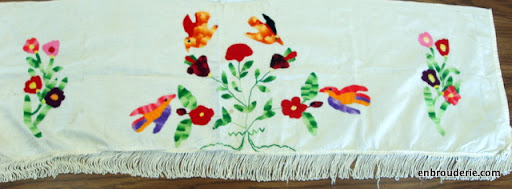
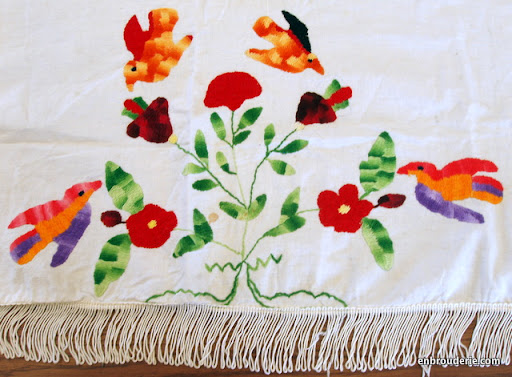
Today I’m showing another embroidery from Dr. Shirazi’s collection (see bottom of post for details on the collection). This is from Mexico, and is worked in matizada (variegated) threads, which are often used in Ocotlan. However, it is really a general style rather than a specific indigenous textile type (many thanks to Bob Freund of Mexican Textiles for the information).

In the closeup of the central design you can see how they used variegated threads to create a sense of movement in the piece.

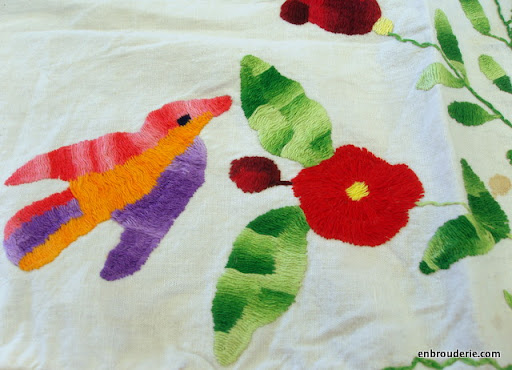
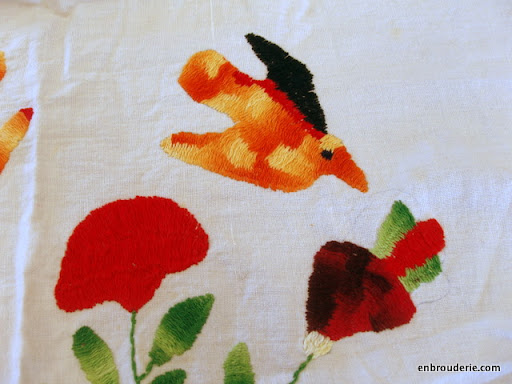
In an even closer view you can see the stitching. It’s done in Bokhara couching.

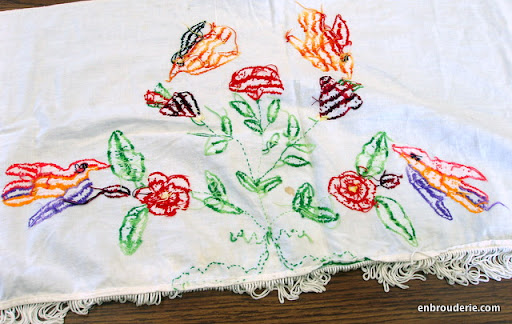
You can see from the back the differences with satin stitch – the back is not covered, it just has stitching at the edges of the outlines and lines of stitching in the middle where the couching stitches are. This keeps the fabric light weight. It’s very neatly done work.

As you can see from this design, you can have a beautiful embroidery without aiming for realism in either colors or shapes. I love these birds.

You can see some similar embroidery in a gallery at Mexican Textiles.

This is one of a special series of posts based on the embroidery collection of Dr. Faegheh Shirazi, from The University of Texas at Austin. Her research is on “textiles, dress, gender identity discourse, and material culture in the Middle East; the meanings of veiling; rituals and rites of passage as they relate to material culture.” Over the years she has collected a number of examples of embroidery from around the world, and has very kindly allowed me to photograph them for my blog.

Posted in Embroidery around the world, Shirazi, Surface embroidery | Tagged , , , | 8 Comments

Hand & Lock (Part 2)

I thought I’d mention here that Hand & Lock is opening a new branch in New York City, including a school of embroidery! And they are kicking it off with a big embroidery conference, “Embroidery in the New World” on November 3-4th – tickets have an early-bird discount until July 31 (here’s the price list). They have some amazing speakers, a fashion catwalk, a prize ceremony for their yearly embroidery contest, and taster lessons from the new embroidery school. (The London branch also has a school of embroidery and embroidery kits).

Now back to my mother’s (Laura’s) account of her tour, with photos she took herself:

Tour (continued)

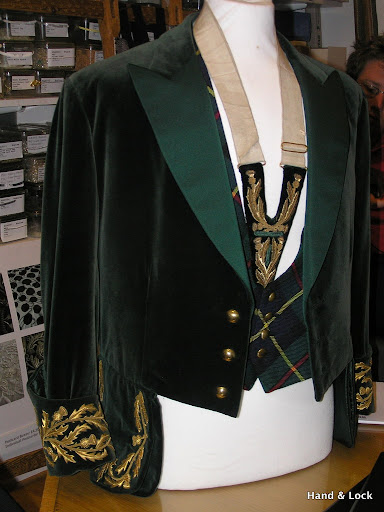
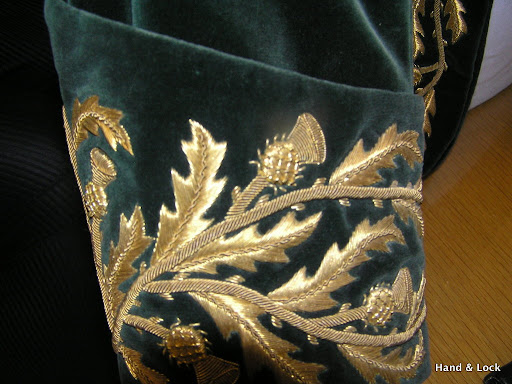
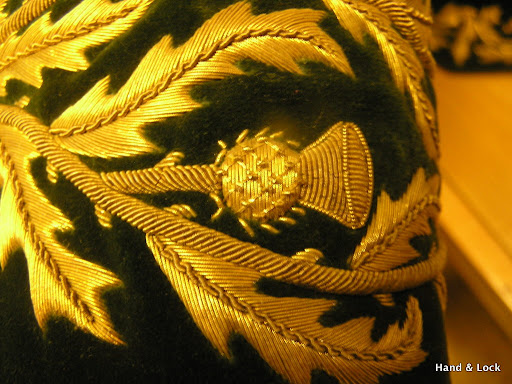
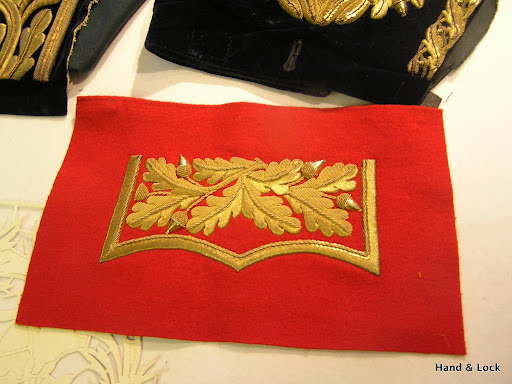
Our tour of Hand and Lock began as I said with a brief description of the two specialties the modern company combines. Hand hired gold work specialists. Here is an antique velvet coat that has been restored. The gold work thistles are the kind of specialty I am referring to-very special indeed. The wall behind the uniform in the background is covered with intriguing drawers – I could easily have spent a very happy hour or two opening them and peeking inside.

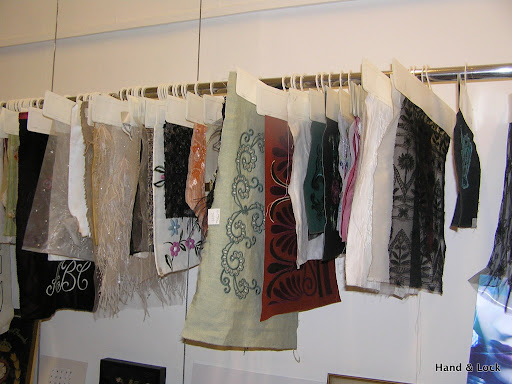
And then there is the wall of sample squares.

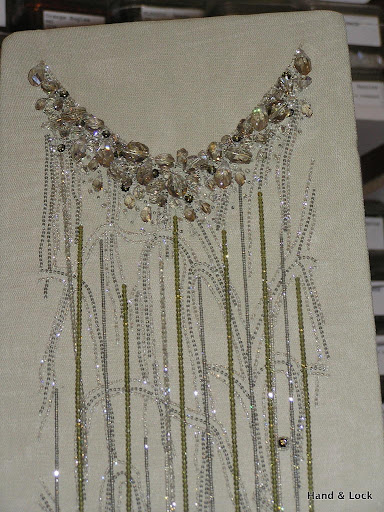
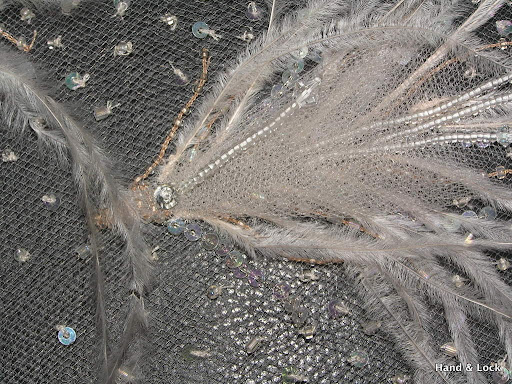
Remember the flapper dress made for Kate Moss and covered with Swarovski crystals (in Part 1)? Here is the sample:

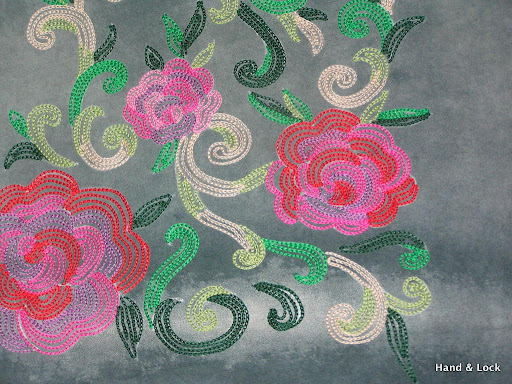
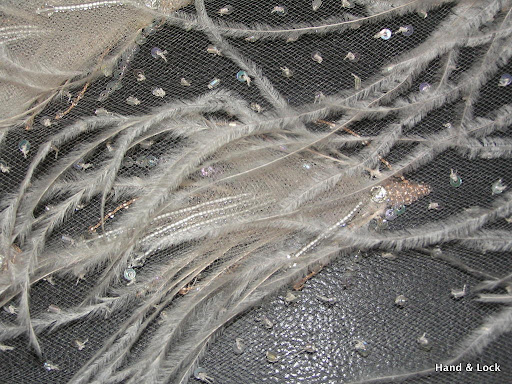
These photos show some of the many many possibilities.

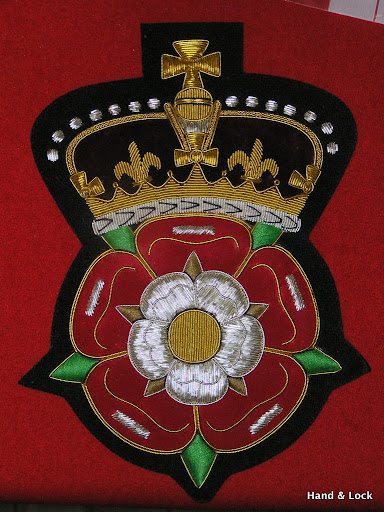
In the second room, it is floor to ceiling with ancient wooden drawers and all three walls hold treasure. The work counter is in front. Badges and Epaulettes with their coils of gold (real) and braid are made here. I mean the coils are coiled here,  the braid is braided and then the badge or epaulette or whatnot is embroidered and embellished. Military badges for uniforms are also featured. Here is one such (I hope I am remembering this correctly) I think it is for a guard at the Tower of London.

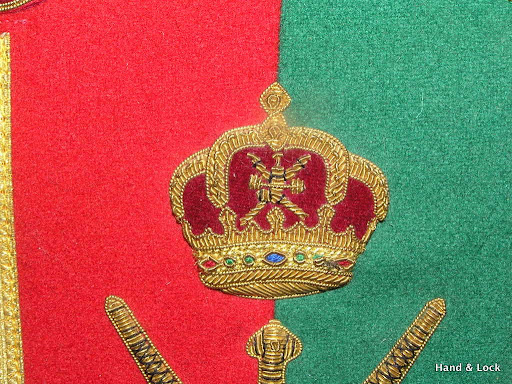
Below is an example of a drum major sash:

and a closeup:

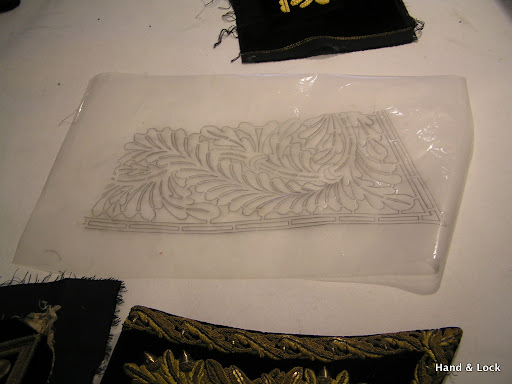
Next is the gold work room. Large counters fill the room. We get a quick explanation and overview of goldwork techniques and a display of some of the many varieties of gold used here. There were coils, and flats, sparking gold, light gold, dark gold-too much to absorb or even remember. Suffice to say, the level of skill was impressive, the possibilities staggering. We received a fabulous lecture on the process whereby the gold is sewn to the fabric. The beginning is:

Amazing. The drawing is next transferred to very thick high grade paper. This is then cut out and is placed (sewn) to the fabric. The gold is applied on top, over the paper! You can see one of the cut out designs under the gold work acorn.

Final stop on the tour is another work room. This sewing room contains antique sewing machines still in use. No computer generated and sewn images here. We saw flags and banners in the making. No trumpet worth blowing in a royal parade could be seen in public without its hand sewn and embroidered banner.

All I’ve got to say is I’m SO JEALOUS. Wish I’d been on that trip! And if you visit London, here’s the tour booking page). Soon there will be one in New York too!

If you are still dying to see more embroidery, there’s a beautiful 4 minute video from Hand & Lock, showing them at work in their studio with tons of gorgeous closeups of very fine embroidery:

Posted in Fashion, Mother | Tagged , , , , | 6 Comments

Hand & Lock (Part 1)

My mother recently visited London, so I sent her on an investigative reporting assignment on embroidery! She signed up for a tour of Hand & Lock’s embroidery studio, which was absolutely fantastic. Here is her report:

Introduction

There are two main divisions at Hand & Lock. Hand (goldlacemen founded 1700s) traditionally deals with heraldic design, goldwork, military insignia, intricate braids and laces, epaulets, badges, all things military.  For instance,  Hand & Lock produces the intricate embroidered badges for the Yeoman Guards (Beefeaters) at the Tower of London, the gold (real gold) epaulettes, sashes and braid for military uniforms and drum majors
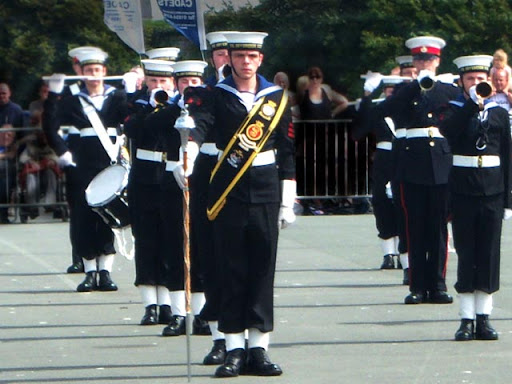
T.S. Sovereign, Barrow-in-Furness Sea & Marine Cadet Band

or clergy.
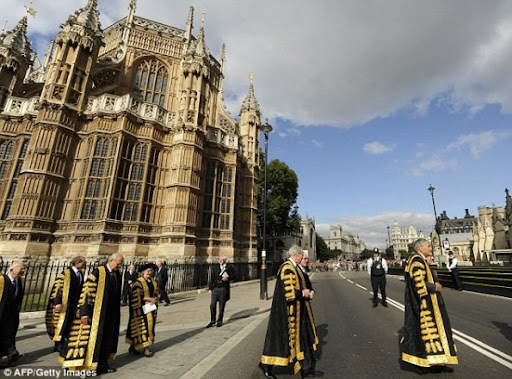
Lock (1900s, fashion) creates for couteries (Christian Dior, Norman Hartnell, and Hardy Amies), high end broadway shows (Lion King), royal Events (Princess Anne’s wedding) and anyone else with an extraordinary amount of money – we are talking about hand embroidery after all. This means multiple highly skilled (read trained for Years) people who have to earn enough to eat working on a garment for many many hours/days/weeks. Further, the fabrics are all special (Not in the sense of special sale at Walmart either), as are the sparkles (Swarskovi crystals), as are the pearls. They are pearls as in oyster grown.

Tour

On a tour of Hand and Lock you are first shown into a cozy room with four comfy leather armchairs surrounding low tables. Two walls are covered floor to nearly the ceiling with drawers holding beads (Not plastic), crystals, feathers, and possibilities probably not even imagined by the novice. The third wall is hung with sample squares. All kinds of fabrics, including but not limited to cotton, silk, net, felt, and leather are embroidered, embellished or both. As you sit in front of these samples the guide presents a bit of the history of the company and explains just what all Hand and Lock does.

Turns out, they do just about anything involving textiles that you want to pay for. This first stop on the tour is where, for example, a fashion designer wanting a special fabric for a runway show
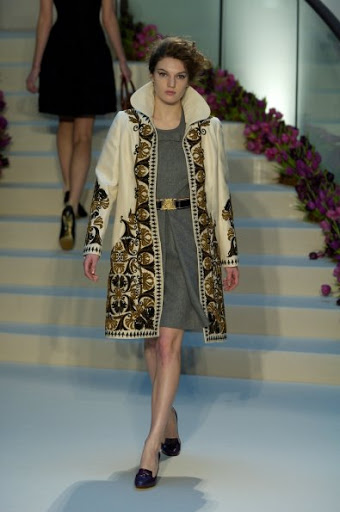
Asprey Autumn Winter 2007

Asprey Autumn Winter 2007

or a coronation
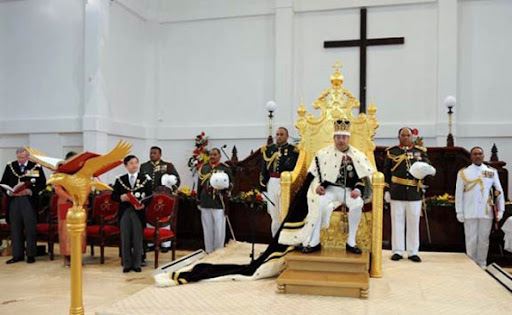
King of Tonga

King of Tonga

or a special dress

Kate Moss

Kate Moss

or costumes for Tom Cruise in Valkyrie
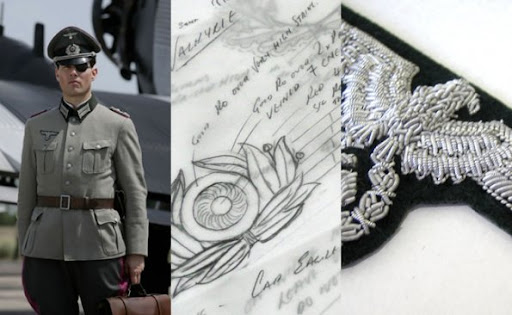
Tom Cruise in Valkrie

sits down with the H&L designer to discuss their ideas and to begin choosing fabrics, colors, threads, sequins, crystals, feathers, stitches.

My mother also got to see the workrooms where all these are created! Really, if y’all have a chance to visit London, y’all should try to stop by (and, they are opening one in New York City for us Americans!).

To be continued!
Posted in Fashion, Mother | Tagged , , , | 8 Comments

Zacatepec, Oaxaca, Mexico

I am very excited to announce a special series of posts based on the embroidery collection of Dr. Faegheh Shirazi, from The University of Texas at Austin. Her research is on “textiles, dress, gender identity discourse, and material culture in the Middle East; the meanings of veiling; rituals and rites of passage as they relate to material culture.” Over the years she has collected a number of examples of embroidery from around the world, and has very kindly allowed me to photograph them for my blog.

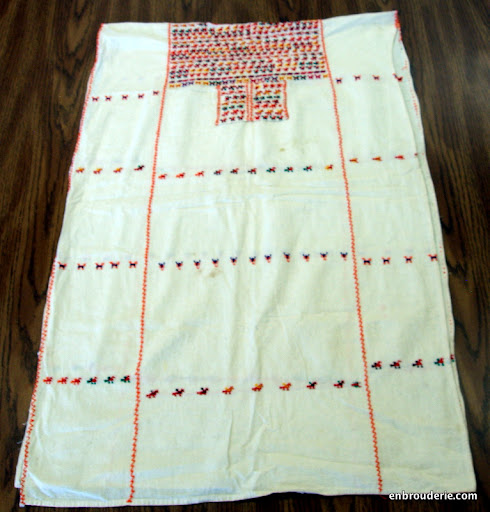
Since Dr. Shirazi is not a specialist in Mexican embroidery styles, I contacted Bob Freund at Mexican Textiles to identify this item. It is an absolutely wonderful website, describing many many embroidery styles, and he was extremely helpful. Below is an embroidered men’s shirt from Zacatepec, Oaxaca Central Valley, Mexico. This is traditional clothing from the Mixtec/Tachuate Indians in Zacatepec, Oaxaca, Mexico (map). The Tachuate Indians are directly related to the Mixtec.

These clothes are hand embroidery on back strap loomed cotton fabric. Sometimes the weaving is done with hand-spun threads.

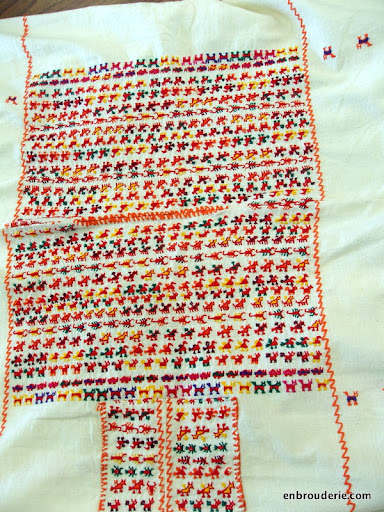
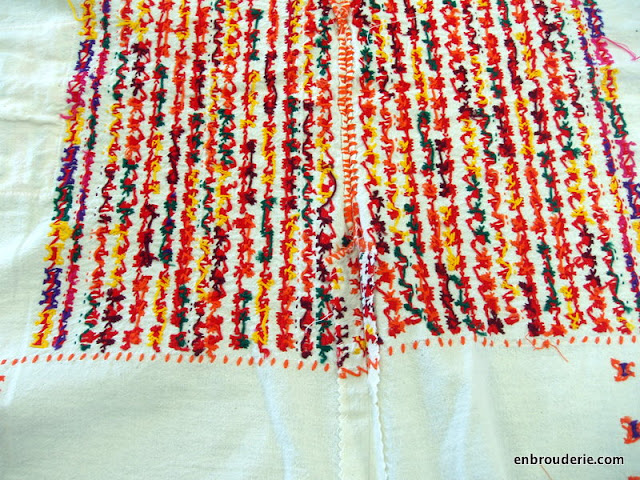
Below is a photo of the area around the neck hole, which is filled with rows of embroidery (the orange thread where the neck is sewn together was done by Dr. Shirazi for storage purposes).

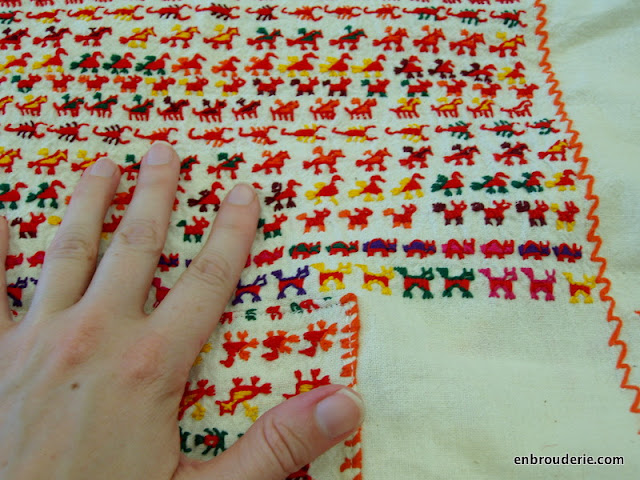
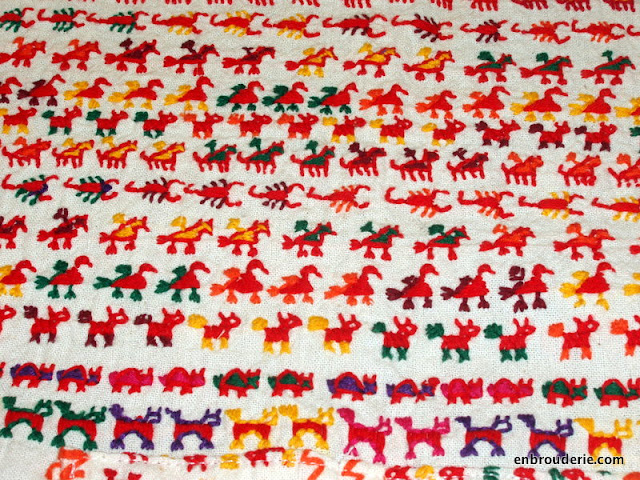
If you look closely, these are actually rows and rows of tiny embroidered animals. Here is a closeup with my hand for scale.

Here is another photo, so you can see the animals clearly. I can definitely see scorpions and birds, and possibly turtles and dogs or horses? They’re very individual and interesting.

Tachaute Indians

Here is the view from the back of the fabric:

Additional examples of these traditional costumes (including the traditional embroidered pants) and the tiny embroidered animals can be seen in the gallery for Zacatepec at Mexican Textiles. Take a look, it’s very interesting.

Posted in Embroidery around the world, Shirazi | Tagged , , , , , , | 3 Comments

Castelo Branco Bird II

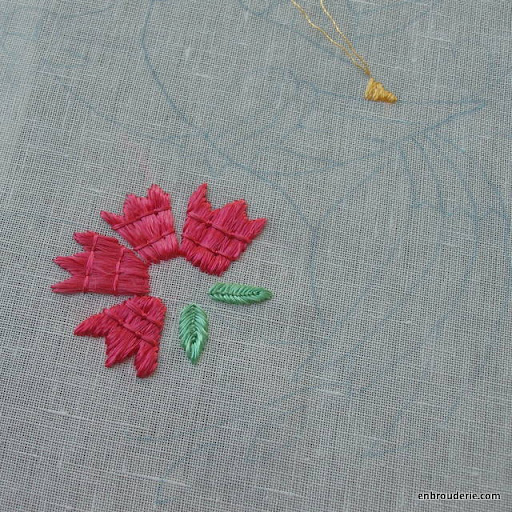
I’ve added two petals and two leaves to the Castelo Branco bird embroidery.

There’s a long way to go, but I’m starting to get the hang of working with the Portuguese art silks. I have to be very careful about the tails, because they really show through if they overlap blank areas. Next up: fill in the flower center and work the stem for this branch. I’m doing this project by completely working blocks of the design so I don’t run out of thread halfway through a motif.

Previous posts for this project are listed on the Projects page.

Posted in Castelo Branco, My work | Tagged , , , | 4 Comments

Embroidery class

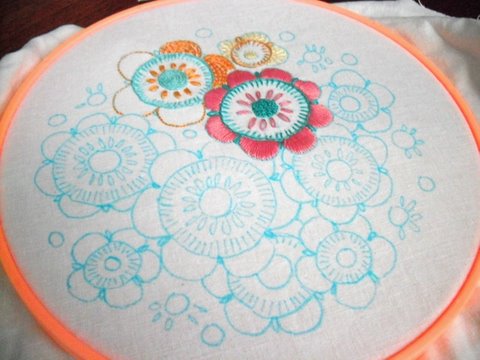
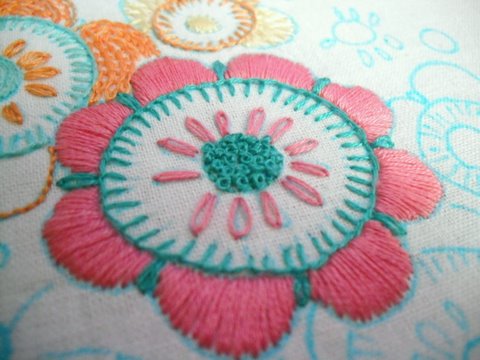
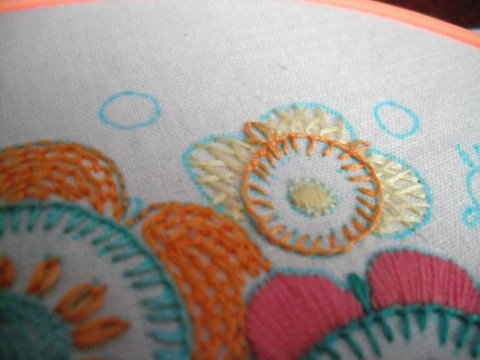
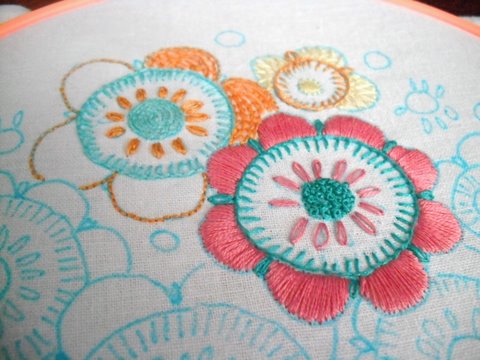
I’m teaching embroidery to some friends of mine. Here is one student’s project so far!

All my students started with a hoop, design of their choice, fabric they picked out, a needle, a pile of floss, and some scissors. I have several embroideries with a variety of stitches on display plus a stitch dictionary, so whenever they finish an area I help them pick a stitch out for the next area. This design is free, found at CraftStew.

This flower has a french knot center, lazy daisies and buttonhole stitches in concentric circles, and satin stitch petals. Isn’t it cute?

The little yellow flower has herringbone stitch petals.

The orange flower has a spiral split stitch center, berry stitches (double lazy daisy), and  chain stitch petals.

My student is a really quick learner!

Posted in Surface embroidery | Tagged , , | 2 Comments

Finished: Custom House Crewel Bellpull

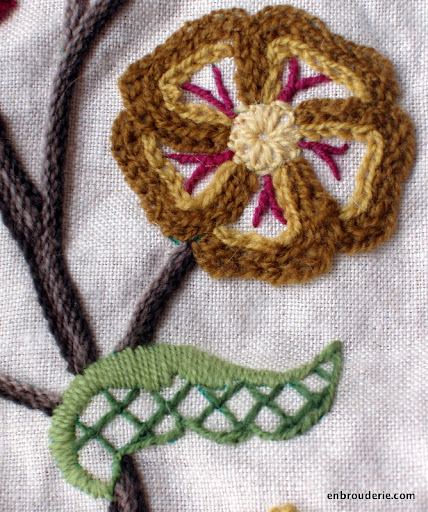
 This was the very first crewel project that I started. It’s such a beautiful design. I finally picked it back up and finished stitching the hill at the bottom, and it’s done! My stitching has improved a lot since I started it. Past posts on this project are listed on the projects page. And I’ll just fill the post with closeups of my stitching. The online shop for the company is here.
Posted in Crewel, My work | Tagged , , , | 13 Comments