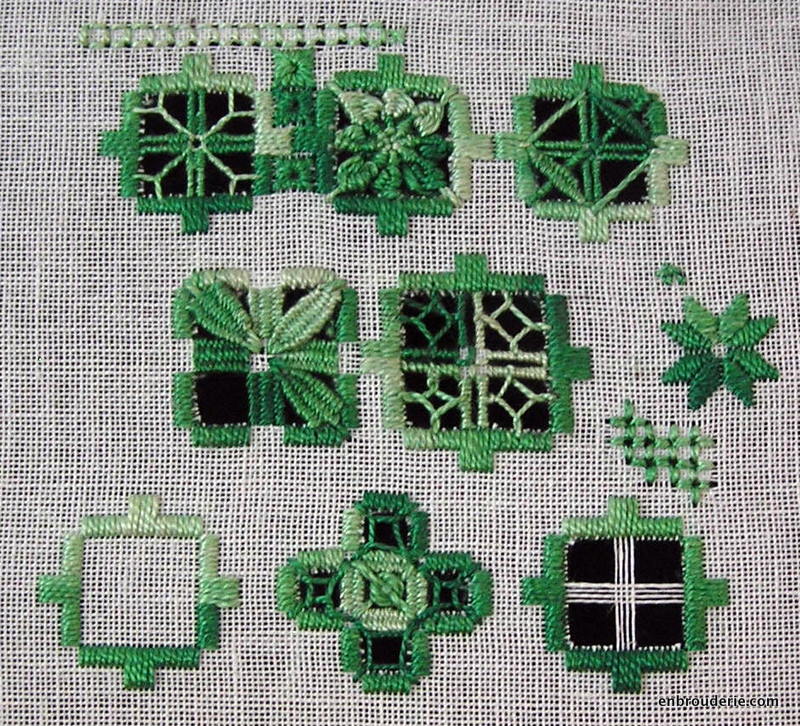
I felt like trying something new, so here’s the start of my Hardanger sampler! I picked stitches that looked pretty in the instructions and tried them out. Turned out great! It’s not hard, actually, though it looks really fancy.
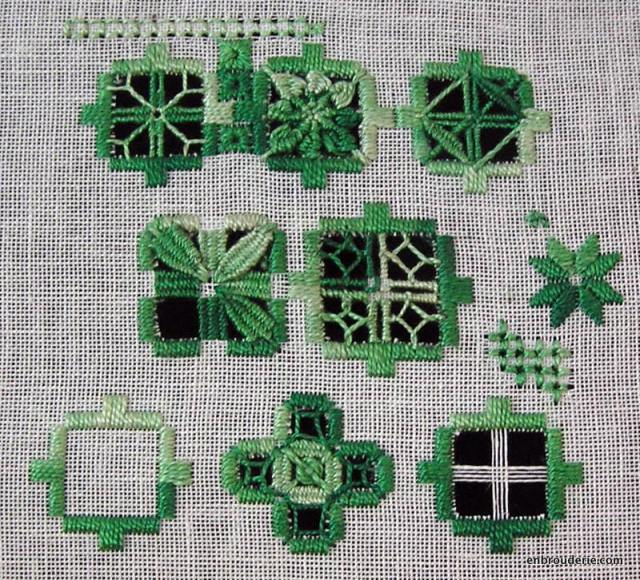
Traditionally, I think you have two sizes of thread, so you can do the lacy parts in the thinner one, but I just used one size in this sampler.
So, how does hardanger work? I left some unfinished blocks so I could explain.


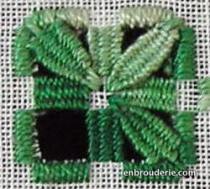
See the satin stitch border in the first photo above? Those are to keep the rest of the linen in place after cutting holes in it. Traditionally, the satin stitching is divided into blocks of 5 stitches over 4 threads (called kloster blocks) on 22 count fabric. It still works if you don’t follow directions, just as long as the satin stitching is facing the right direction to keep everything in place. The middle photo is right after you cut the threads in the interior of the square, leaving a few so you can weave in bars. The last photo is 3/4 done: the bars are complete, and I’m just adding in some additional needleweaving to decorate the holes. Of course, you can also leave the square holes empty.
What if you want to start, but want a more organized guide to hardanger? You can check out my post, Hardanger, which includes a lot of links, including Nordic Needle’s extensive tutorials, overviews, and designs. You can check out my post, O Canada, which talks about The Victoria Sampler’s line of instructional kits. And there’s also a small hardanger course at Needlework Tips & Techniques.
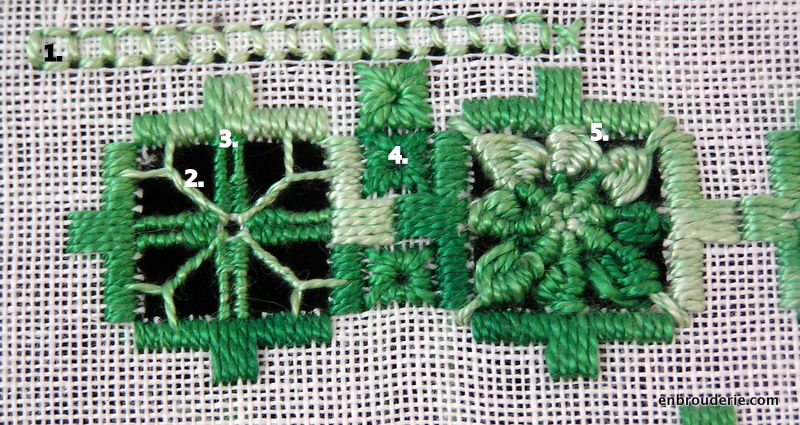
For a disorganized introduction, I’m going to do some closeup photos with number labels. I will then provide some links to the stitch directions.


- Woven leaf
- Woven bars
- Woven triple spokes
- Dove’s eyes
- Wrapped bars
- Star
- Star filler
- Spiderweb filling
- Square filet
There’s a few more stitches I really want to try, so you’ll be seeing this sampler again sometime. You can check my Hardanger category for more posts on the subject.













 embroidery for ducks