Joker’s Teeth

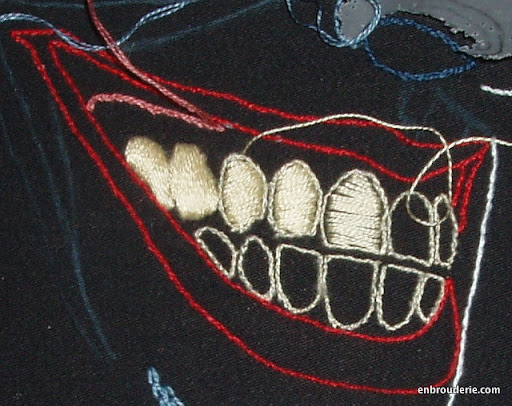
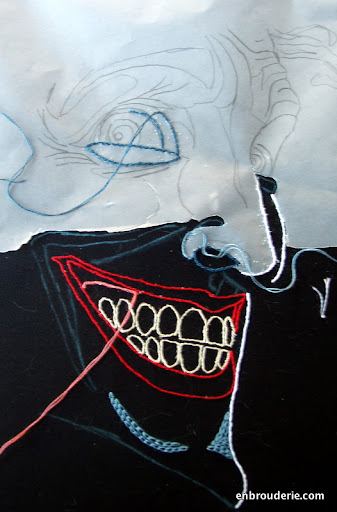
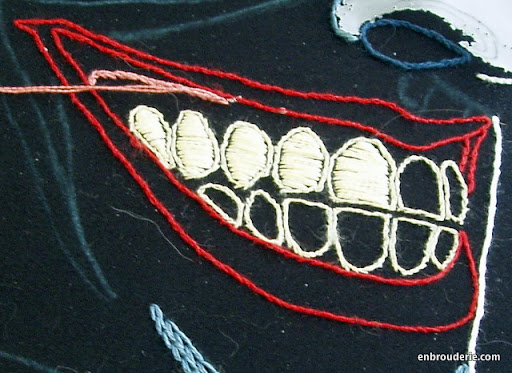
I’ve been working on the Joker’s teeth (see first post on the Joker). I settled on padded satin stitch in pale yellow. Each tooth has a split stitch outline in 1 strand. Then I added a layer of padding with 2 strands:

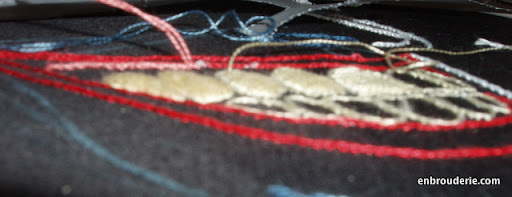
I decided on a second layer of padding with 2 strands, and a top layer of satin stitch over both the padding and the split stitch outline in 1 strand. In the photo below, the two teeth to the left are finished. The next two teeth have two layers of padding. The final filled tooth has one layer of padding.

I tried to take a photo from the side, so you could see the padding.

I think it’s coming out well, though a little dusty (oops). The teeth really stand out, and will even after I fill in the gums. My top layer of satin stitching is not completely parallel though – the angles of the stitching are wandering a little. But it’s the Joker, he should have crazy teeth. Nevertheless, I’m sure I’ll be very good at parallel stitching by the time I’m done with the teeth from all the practice.

I’ll try for better photos next time, y’all, these are all inside at night so the lighting is terrible.


Posted in My work | Tagged , , , , | 3 Comments

Tajikistan Ornament

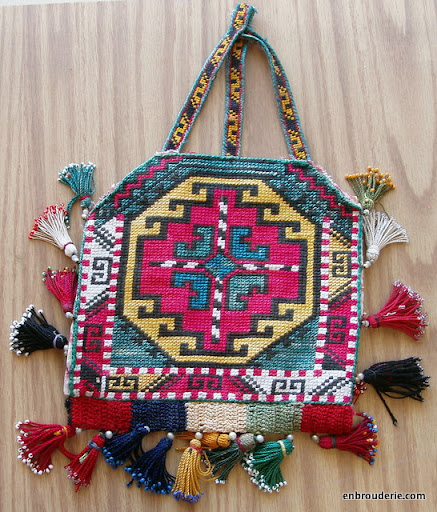
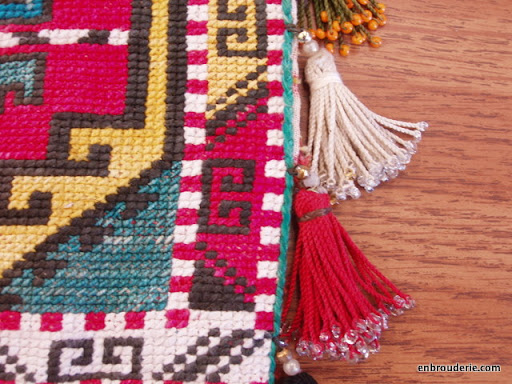
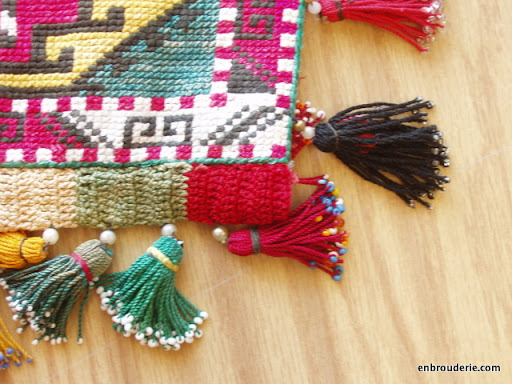
Look at this little tasseled ornament! It’s cross-stitch from Tajikistan, and is another example from Dr. Shirazi’s collection (see bottom of post for details on collection).

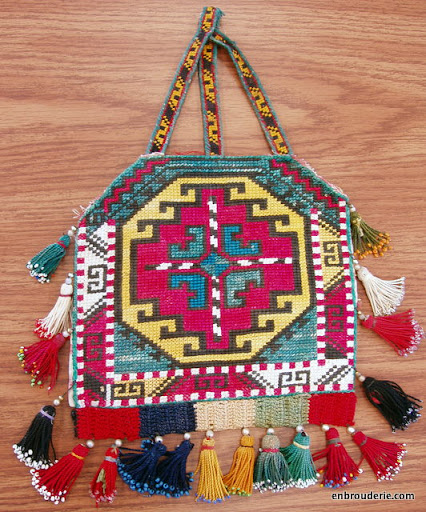
I like the design – very bright and geometric. Finishing the edges with beaded tassels and a crochet border on the bottom is a nice touch. Here is a photo with the tassels laid out better, but slightly worse lighting:

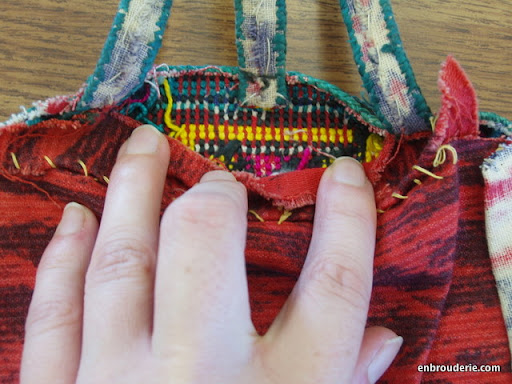
I’ll just finish with a few closeups, and a picture of part of the back (it’s lined, but the lining came loose in a few places).

This is one of a special series of posts based on the embroidery collection of Dr. Faegheh Shirazi, from The University of Texas at Austin. Her research is on “textiles, dress, gender identity discourse, and material culture in the Middle East; the meanings of veiling; rituals and rites of passage as they relate to material culture.” Over the years she has collected a number of examples of embroidery from around the world, and has very kindly allowed me to photograph them for my blog.

Posted in Embroidery around the world, Shirazi | Tagged , , , , | 3 Comments

embroidery in San Francisco

Y’all, I am dashing around San Francisco on vacation this weekend. It is great!!!! I wanted to mention that I found the most wonderful gallery with a truly, truly AMAZING series of embroideries. It’s the Asian Arts Center, open Monday through Saturday 10am to 6:30pm and Sunday noon to 5pm. The front door is at 720 Market Street and the back door at 47 Geary Street. I don’t have any photos 😦 cause I didn’t have my camera. And they discourage photos anyway. And I couldn’t afford any of them 😦 But if you are anywhere near San Francisco and want to see incredibly high quality gorgeous Chinese silk embroidery in all different styles up close, you should definitely, definitely stop by. I had a wonderful time looking at them all – such tiny, tiny stitches, such beautifully detailed work. Real artistic work. WOW. Totally fantastic. There’s some on the ground floor, and more on the second floor.  They let me use a magnifying glass to look them over. SO COOL.

Posted in Design sites, Embroidery around the world | Tagged , , , | Leave a comment

Book Review: Turkish Embroidery

A while ago, I wrote a post about ISMEK, a craft and embroidery center in Istanbul, and its four gorgeous free Pattern Books,

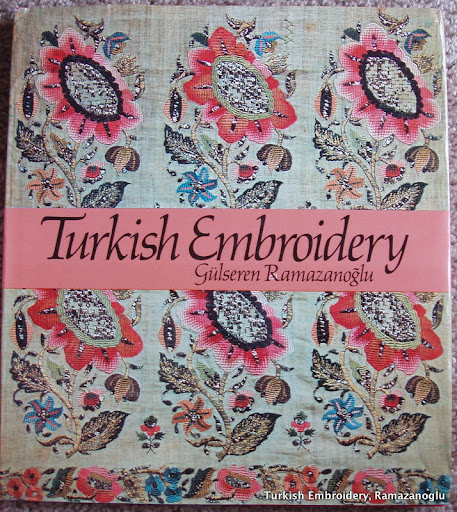
I finally, finally found a good book about the stitches and colors used in Turkish embroidery. I am delighted! The book is Turkish Embroidery, by Gülseren Ramazanoglu. Van Nostrand Renhold Company, New York, 1976. ISBN 0-442-267991.

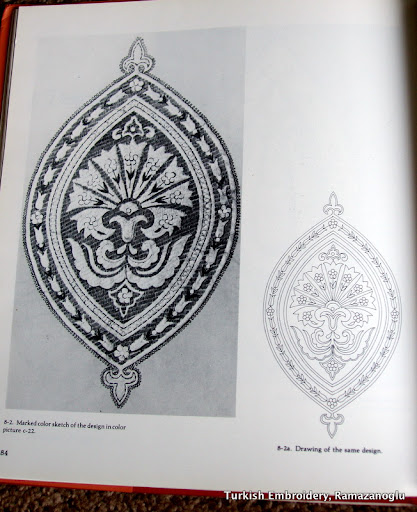
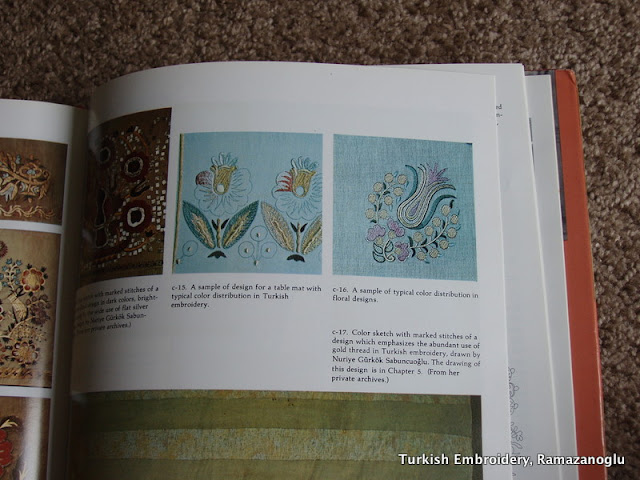
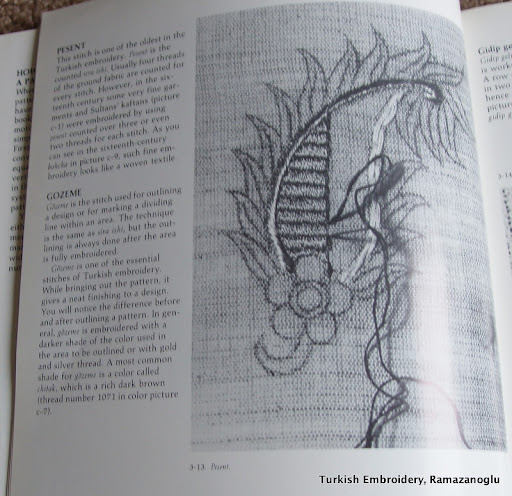
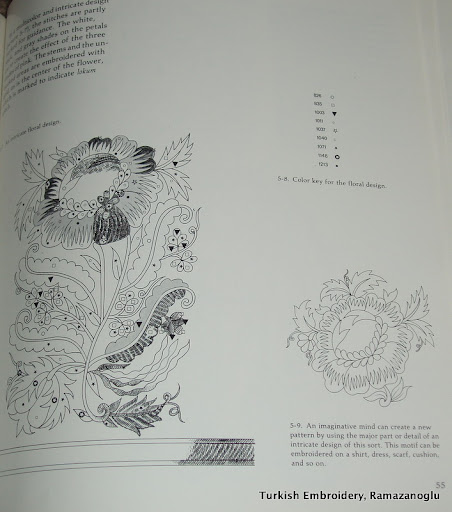
This is a wonderful book – it has many detailed photos (most black and white, but some color too) of Turkish embroidery, with discussion of the materials, stitches, and colors used and a tracing outline. I’ve photographed a few pages to give you a taste – I strongly recommend it.

Some photos show work in progress. It’s very helpful for understanding the traditional approach. It’s not a detailed step-by-step project book though.

It turns out that one of the fundamental stitches in Turkish embroidery is the double running stitch (sira ishi – means double sira). However, unlike blackwork, it is used as a solid filling stitch! Patterns in the filling are created by varying how rows are aligned. These stitching types are named after the patterns: verev sira means “diagonal” sira, düz sira means “straight” sira, döne döne sira means “circular” sira, etc. It’s also used for outlines of solid areas. I had no idea – it looks so different from blackwork that I never would have guessed they make such heavy use of double running stitch.

Posted in Book reviews, Embroidery around the world | Tagged , , , , | 12 Comments

artist: Kate Kretz

Today I am featuring the artist Kate Kretz! We have corresponded a little by email, so I have a mini-interview plus photos of her work. My writing is in italics, the rest is Ms. Kretz.
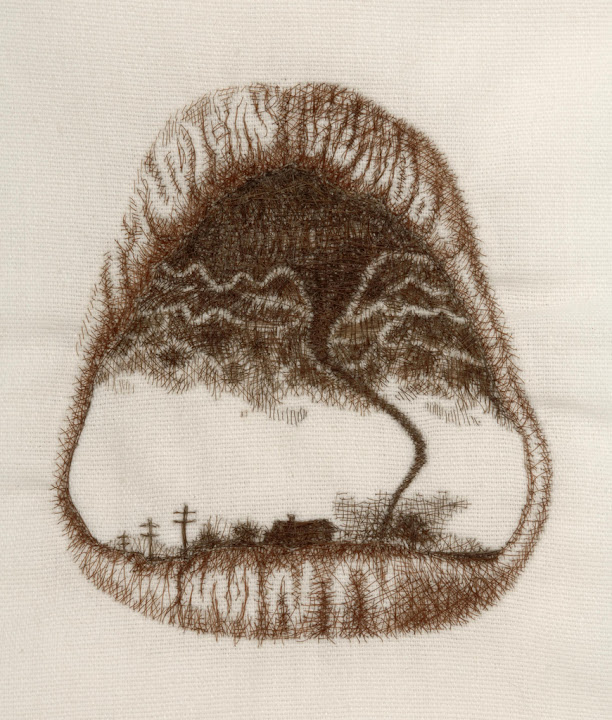
Kate Kretz, Threat of Heavy Weather

My degrees are in painting, so, as far as embroidery goes, I have been teaching myself/making things up as I go along. The lack of training is incredibly liberating: if you don’t know “the rules”, it allows you to create without limitations. Right now I am working on a 3D hair embroidery, and I spent 20 hours on it before I started to feel that it just might work and not fall apart. Pushing those boundaries keeps the work exciting for me.
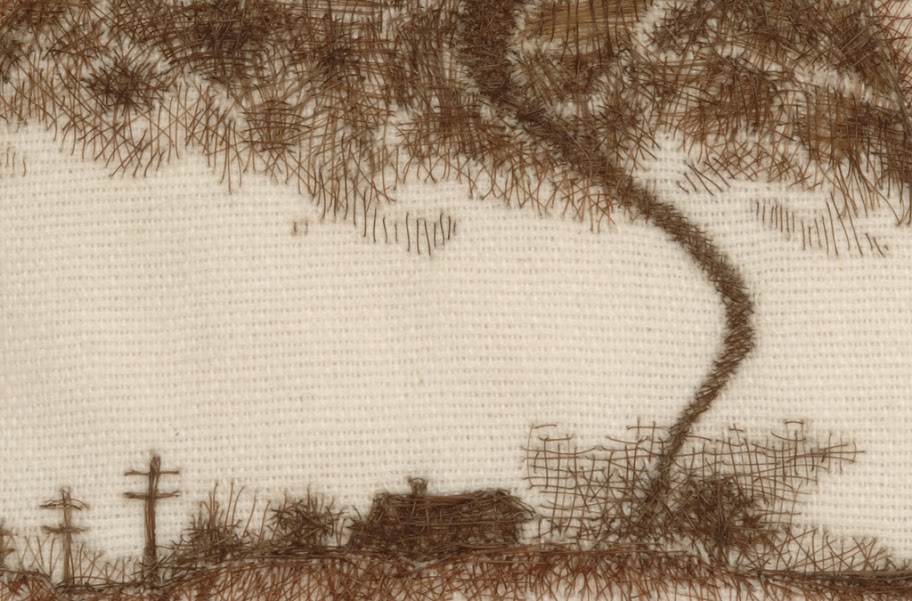
detail of Threat of Heavy Weather

With the hair embroideries, I don’t trust disappearing fabric markers, so I actually just “draw” with the hair, as if I was making a mark on a piece of paper. Each embroidery takes about 3 months. I go through 3-4 hairs in an hour. It is a tedious, maddening process: the hair frequently slips out of the needle, and sometimes breaks at inopportune times. I tie the hair off at the beginning and the end of each strand, which is tough on the hands, and my current piece uses blond hair, which essentially “disappears” as you are working with it if the light is not hitting it just right. Finally, hair varies quite a bit in color and thickness from one end of the strand to the other, which makes it hard to plan & create values in your “drawing.”

detail of Oubliette II

One of my works, “My Young Lover”, has hair that actually appears to “grow” out of the pillow: each strand has a drop of archival glue on the end of it to act as a “stop”, and I invented a tool to thread each strand through the pillowcase. One of my boyfriends once brought me his beautiful golden ringlets in a shoe box, saying “I think you love my hair more than you love me.” I kept the curls in a cut glass box for several years, and decided to get them out of the house and make art with them when I eventually got married.

My Young Lover, 2005

Most of the hair is mine, procured by running my hand through my hair after washing. I have done an embroidery (and I am currently working on a companion piece) using the hair that was on my head when I was carrying my daughter. Hair is like the rings of a tree: it records extreme life experiences, and holds so much meaning.

Dream, 2010

“Heart Center” features a three-dimensional heart that I envisioned, and then tried to realize by making up techniques to create the forms. Lately, it seems as though nothing is worth working on unless there is uncertainty about whether I can pull it off. I continue to paint, but I am continuously seduced by the sensual, tactile quality of fiber: I feel that it feeds an important, almost primal, need as our world becomes increasingly virtual.

Heart Center, 2009

Heart Center in progress

I maintain a studio blog (note from Hannah: occasionally NSFW – international readers that means some of the art is racy), and anyone who is interested in how these pieces were made step-by-step can look through the archives: it’s an open book. Here is a month where I have just begun the heart piece, and I am a quarter of the way through a hair embroidery.

Also from the blog, this view of the back of one of the hair embroidery tornadoes, and an in-progress view of the heart. If you want more photos of completed work (very cool!), see her fiber-based work flickr set and her general flickr set. If you want to read another interview with Kate Kretz, there is an interesting one at Mr. X Stitch, covering a different set of questions.
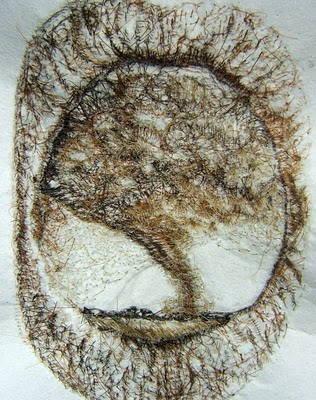
back of Oubliette II
Posted in Uncategorized | Tagged , , , , | 5 Comments

Suzani from Tajikistan I

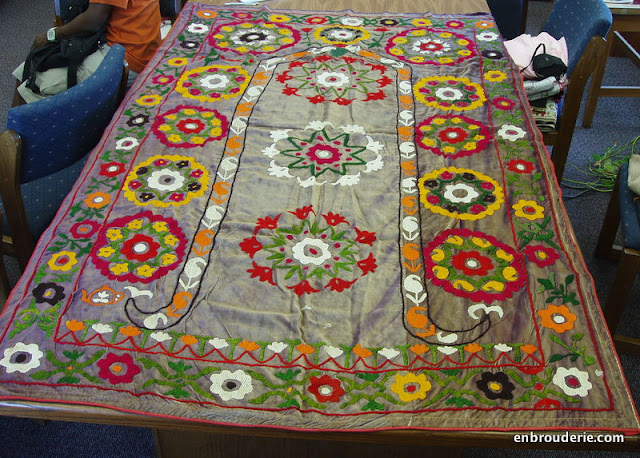
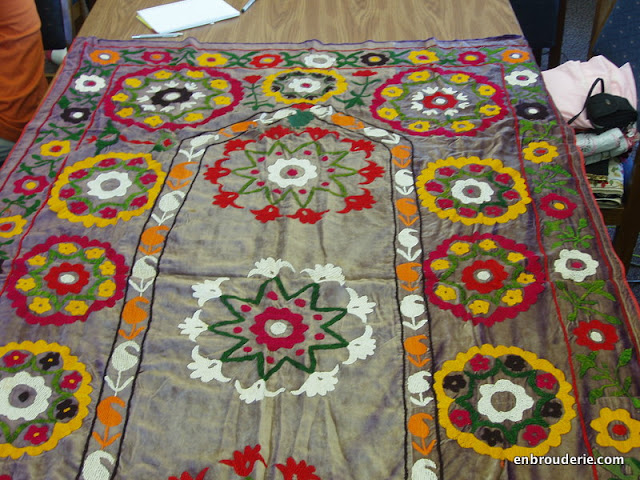
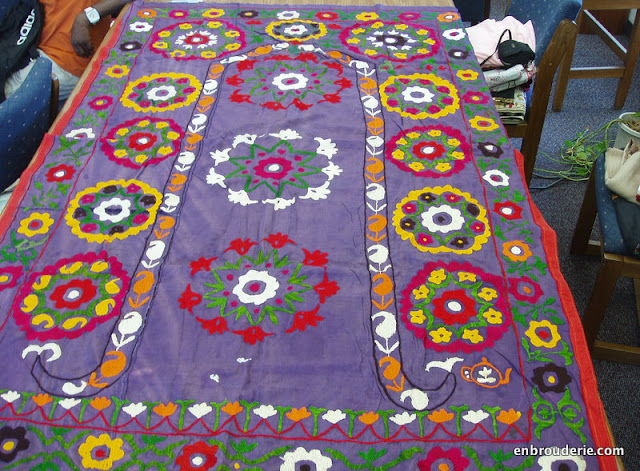
This is a wall hanging from Tajikistan, purchased in Iran (ignore the innocent bystander caught in the photo). Tajikistan is next to China and Afghanistan. This suzani is also in Dr. Shirazi’s embroidery collection (many, many more left to go!).  Suzani literally means “needlework” in Persian.

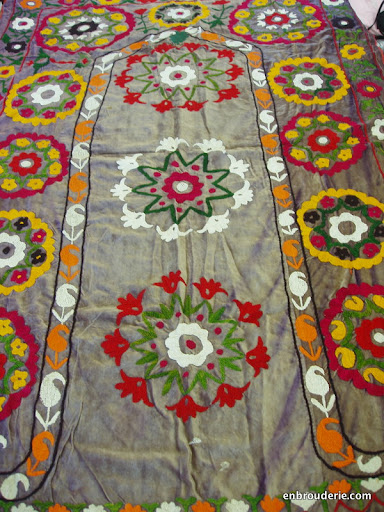
You can tell which direction is up from the shape outlined in orange and white in the center. This notch represents the mihrab, the niche in the wall of a mosque that indicates the direction of Mecca, so that Muslims know which direction to face while praying.
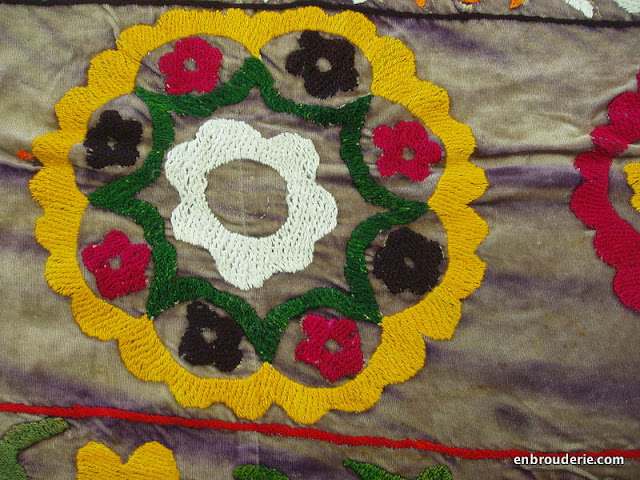
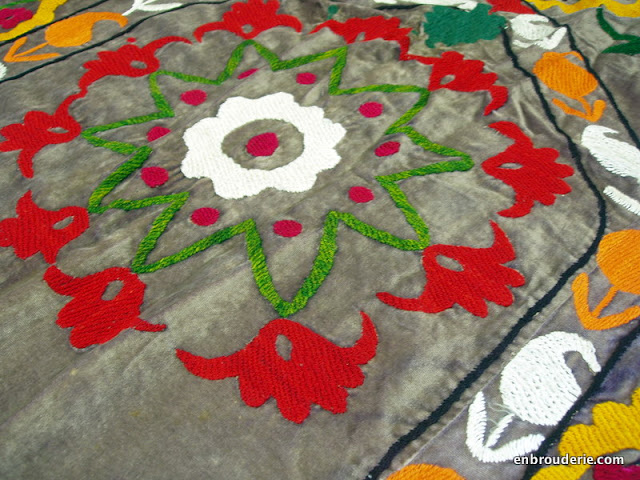
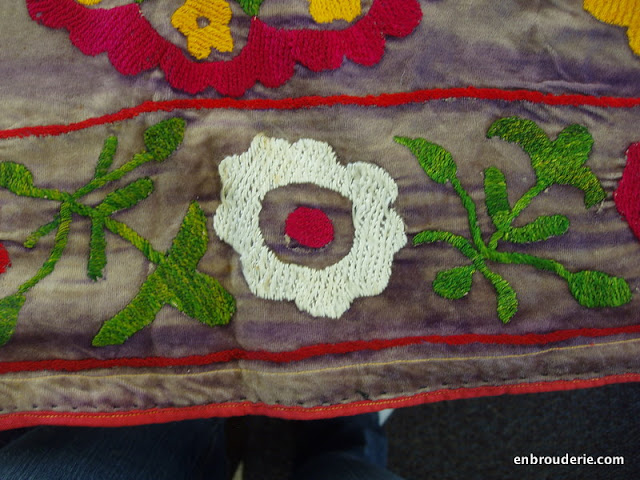
Below are  close-up photos of some of the motifs.


I wrote more about the stitching and motifs in suzanis in a previous post, Suzanis from Uzbekistan.

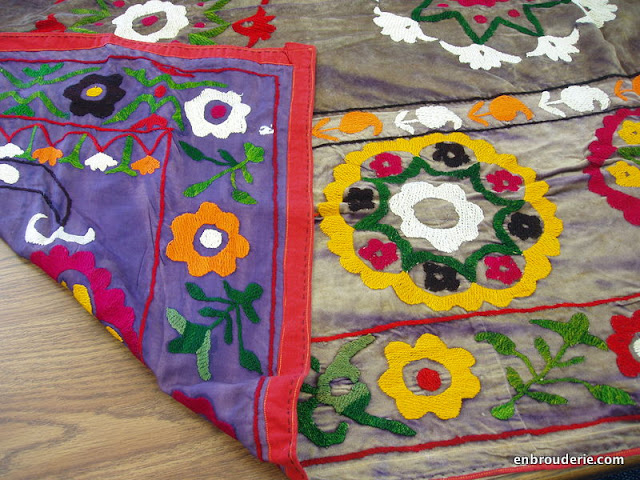
Now I’d like to show you the back of the suzani.

This is a spectacular demonstration of dyes fading in the sunlight. The original owner of the suzani left it hanging in bright light. The back of the suzani was protected from fading. The vast majority of dyes are not lightfast (i.e. they will fade when exposed to light). So when you look at historical tapestries and embroideries, keep in mind that many of the colors may have faded away – the dominant colors may be in areas where lightfast dyes were used, and not the original impression intended at all. Here is one last comparison photo of the front and back:

This is one of a special series of posts based on the embroidery collection of Dr. Faegheh Shirazi, from The University of Texas at Austin. Her research is on “textiles, dress, gender identity discourse, and material culture in the Middle East; the meanings of veiling; rituals and rites of passage as they relate to material culture.” Over the years she has collected a number of examples of embroidery from around the world, and has very kindly allowed me to photograph them for my blog.

Posted in Embroidery around the world, Shirazi | Tagged , , , , | 6 Comments

Software for Embroidery Design II

As a follow up to my earlier post on quality free graphic design software, I thought I’d let you know about top-notch free publishing software. Scribus is useful after you have your diagrams and outlines drawn and photos edited. It manages page layout for you – so you can create a professional look for your brochures, or magazines, or kit instructions, or fliers, or posters (like the poster below).

I haven’t had a chance to use it yet myself, but I found this page of links to Scribus tutorials. My impression is it’s slightly confusing when you start out, but it does a very professional job. And the tutorial on making the poster to the left is here.

Anyway, I know some of my readers publish their own designs, so perhaps this will be helpful!


Posted in Color and design, Free resources online | Tagged , , , , | 2 Comments

The Joker

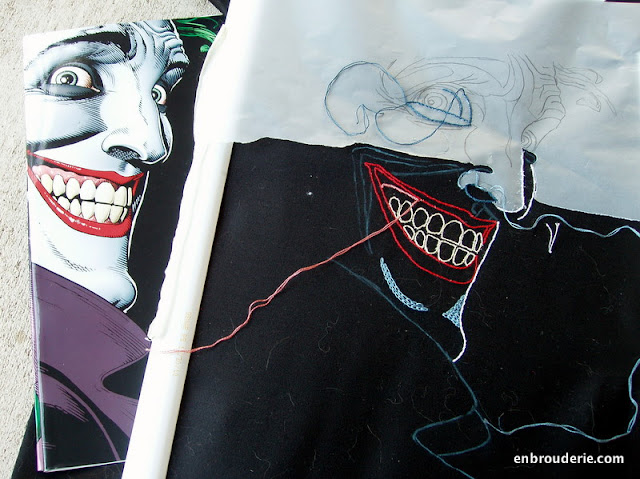
So, a while ago I promised my cousin an embroidery for a present. I finally got started on it. It’s from his favorite comic book, Batman: The Killing Joke. I’m enjoying working from a comic book – The Joker has some fun colors, and the design is really cool. Unfortunately, I’m having trouble with the colors coming out right in the photo – some of the blues are darker and a little more purple. The fabric is black cotton sateen, which I really like. It has a nice sheen, and it’s easy to work on.

I’ve started outlining the base layer. I’m working the lips and teeth in padded satin stitch, and the gums in split stitch. I want to work most of the face in shades  of blue in chain stitch. I was also thinking about doing the right side of the face (the part that’s turned away from us and barely visible) in split stitch or extra tiny chain stitch or something to differentiate it from the rest.

At the moment I’m thinking about trying to work the eye in buttonhole over split stitch (so that it’s padded and stands out). I think it’d be interesting to pad the cheekbones too. Do y’all think I could do chain stitch over split stitch for padding? I was also considering padding some areas by stuffing the back. Any ideas?

Posted in My work | Tagged , , , | 4 Comments

Palestinian cross-stitch

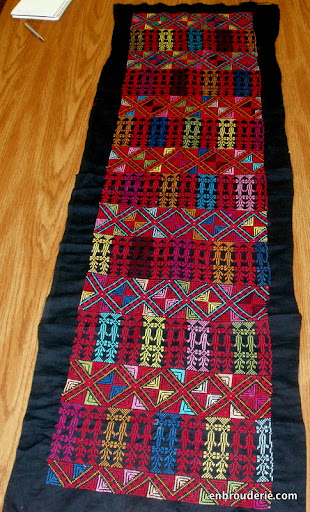
This table runner (it’s too big to be a scarf!) is a traditional Palestinian cross-stitch design from Dr. Shirazi’s collection (see bottom of post for details on the collection). You can get an idea of the scale from my notebook and pen visible in the top left. I also think I may have photographed it upside-down (oops) because some of the motifs look like some kind of plant (corn? wheat? whatever they raise over there), and they look like they grow the other direction. Sorry about that, y’all!
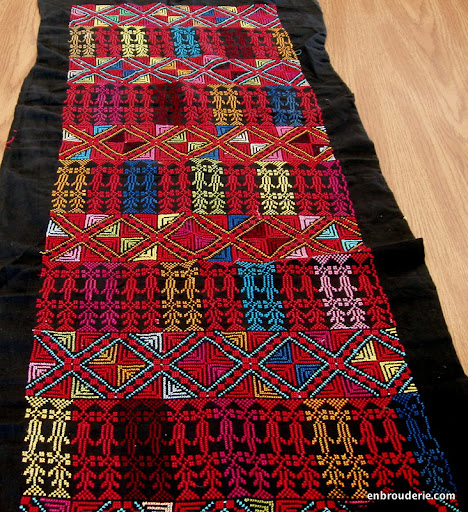
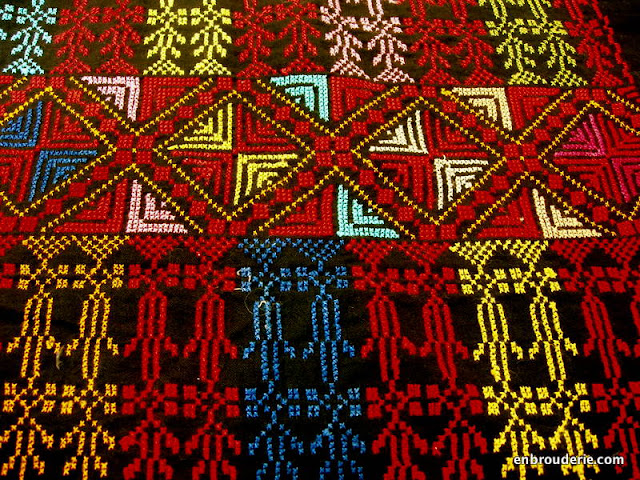
Cross-stitch seems to be a traditional Palestinian form of embroidery – Google Image search produces a whole lot of beautiful works. Most of the color schemes are based around red, and the patterns tend to be geometric. I will have to look into why red is so common, because it seems to be a really standard color base. It’s hard to photograph the full piece since it’s so large. Here is a closeup of part of it:

And next is an even closer photo where you can see the individual stitches. This took absolutely incredible amount of work. Honestly, even one of the rows from this design would take a lot of time!

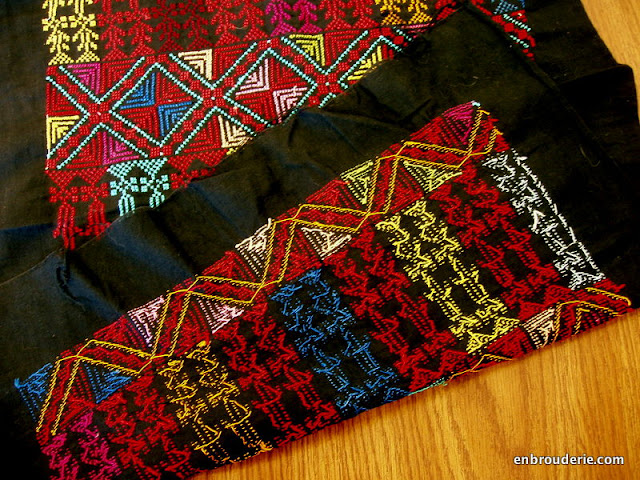
The back is very neatly done too.

This is one of a special series of posts based on the embroidery collection of Dr. Faegheh Shirazi, from The University of Texas at Austin. Her research is on “textiles, dress, gender identity discourse, and material culture in the Middle East; the meanings of veiling; rituals and rites of passage as they relate to material culture.” Over the years she has collected a number of examples of embroidery from around the world, and has very kindly allowed me to photograph them for my blog.

Posted in Cross-stitch, Embroidery around the world, Shirazi | Tagged , , , | 14 Comments

Book Review: Decorative Boxes

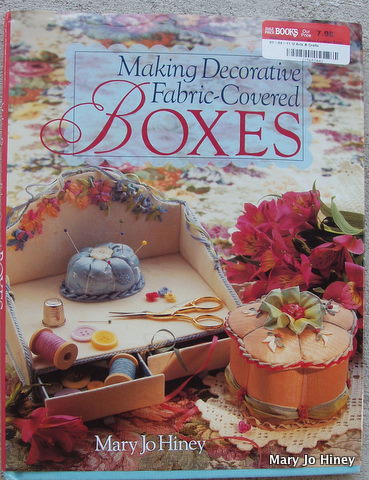
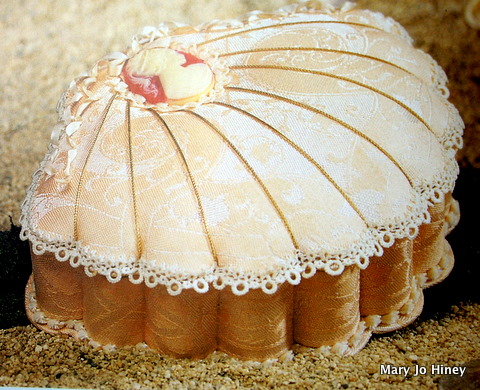
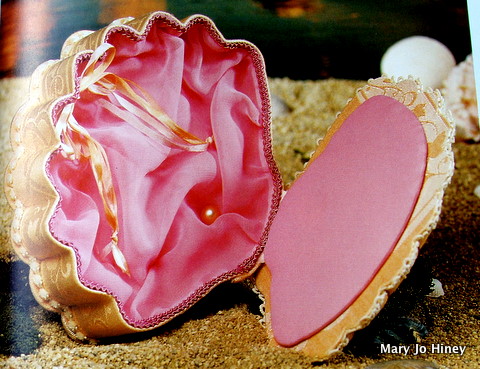
This is a review of the book “Making Decorative Fabric-Covered Boxes” by Mary Jo Hiney. Sterling Publishing Co., Inc., New York, 1996.
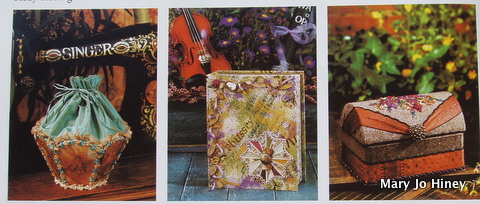
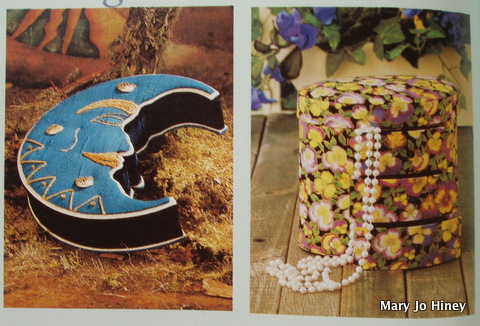
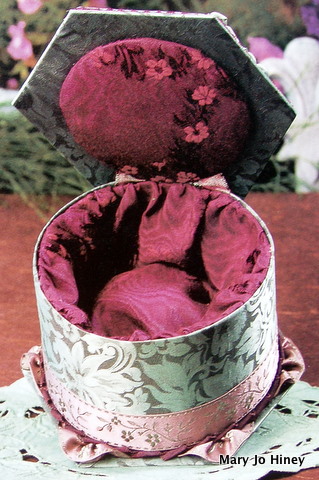
Y’all, I haven’t been doing embroidery all that long, but I can already see that it won’t be long before I have many more finished works than wall space to hang them on. So I’m starting to look for solutions. This book is all about making decorative fabric-covered boxes! I think making boxes in this book (or variations on them) with my own embroidery for decoration would make fantastic gifts (either to myself or to someone else). There’s a huge variety of boxes in this book (21 of them to be precise), and instructions and patterns for all of them.

They come in all kinds of shapes, with different lids and hinges and drawers.

There are some simple designs too, but I really love the fun ones! You’ll have to get the book to see the ones I didn’t post photos for. They’re all great.

Posted in Book reviews, Finishing techniques | Tagged , , , , | 4 Comments