Gifts from Portugal: Castelo Branco embroidery

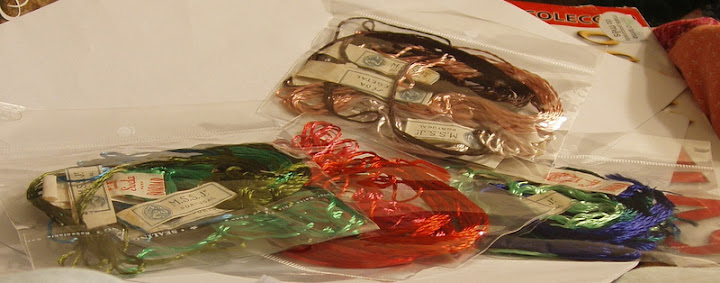
After my last post on Castelo Branco embroidery, Méri mailed me two Portuguese magazines about it, plus some gorgeous silks (so incredibly generous of her!). I’m so excited! I will definitely be trying it soon!
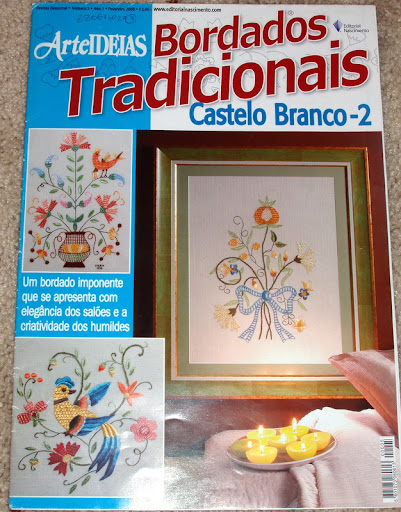
The first magazine is “Bordados Tradicionais:  Castelo Branco – 2” from the magazine Arte Ideias, Numero 5, Ano 1, Fevereiro 2008 (“Traditional Embroidery: Castelo Branco 2”, from the magazine Art Ideas, Number 5, Year 1, February 2008).  The magazine website is at Arte Ideias and previous editions (such as this one) can be requested here. It has a total of 9 gorgeous designs in it. There are limited instructions – this is not a step-by-step project book. The designs are great, and would look lovely in any type of embroidery style. I’m going to try to do it traditional Castelo Branco style, though – just have to pick a design. Maybe the little bird on the cover!
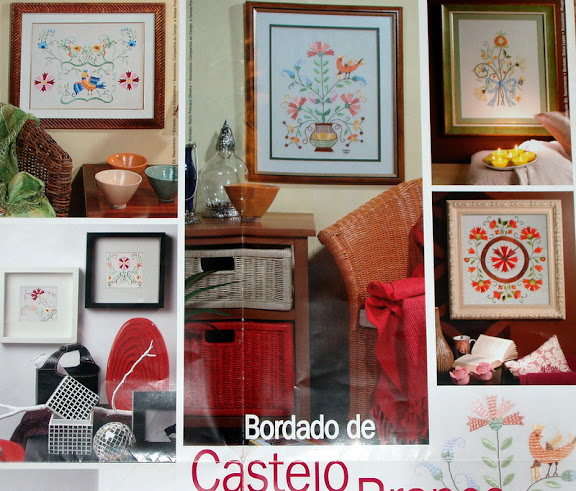
The other magazine is the same as she sent to Mary Corbet, and is described in her post already so do go look. The name is “Bordados de Castelo Branco,” from the magazine Belas Ideias, Edição Especial No. 1 (Embroidery of Castelo Branco, from the magazine Beautiful Ideas, Special Edition Number 1). The magazine’s website is at http://tuttireveditorial.com/pag/num_ant_belas_esp.html. It’s bigger than the other, with a lot more designs and more indications for colors and stitches.

Really, I can’t recommend these magazines enough. They have so many great designs, and they have a lovely unique style.

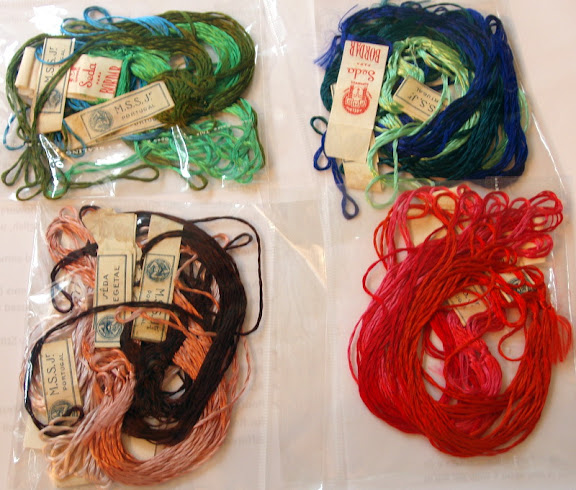
Finally, the truly awesome Méri sent a pile of different colors of the most amazing silk.
Posted in Castelo Branco, Design sites, Embroidery around the world | Tagged , , | 6 Comments

Little mouse

OK, y’all, I totally started another new project. But at least it’s a small one! I wanted to work on one I could finish quickly. Isn’t this mouse just adorable? It’s a kit from Woodland Threads, which is a Canadian embroidery company that specializes in mouse designs. This is the April mouse design (they have one for every month plus lots of others). Why does Canada have so many wonderful design companies? Is it just too cold to do anything else? Anyway, the whole kit came out to $16 plus shipping. They do take Paypal, though that’s not obvious from the website. Here’s photos of my progress with buttonhole and long-and-short stitch on the flower:

Posted in Design sites, My work, Surface embroidery | Tagged , , , , | 5 Comments

Follow up: Geometric chain stitch

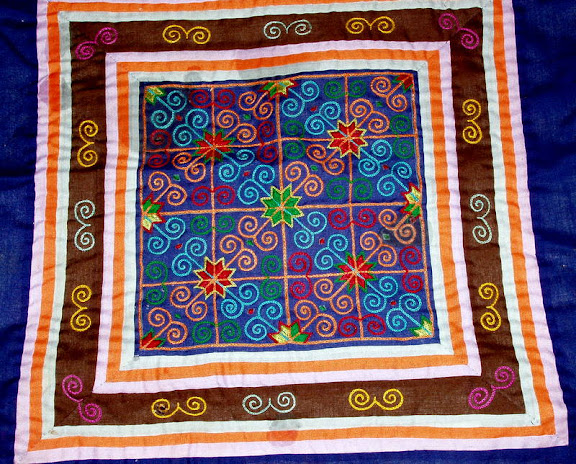
So, several of y’all had more questions about the embroidery in this picture (previous post about the geometric chain stitch design).
First, about the scale: The inner core of the design (consisting of the 4×4 block of squares) is 7 inches/17.8 cm across. So each small square outlined in orange is around 1.75 inches/4.4 cm inches across. I should mention though, they are not actually exactly square or exactly the same size – I think the original embroiderer just drew it by hand without bothering with a ruler. The entire cushion front (including the blue that you see at the edges of the photo) is 16 inches/40.6 cm across.

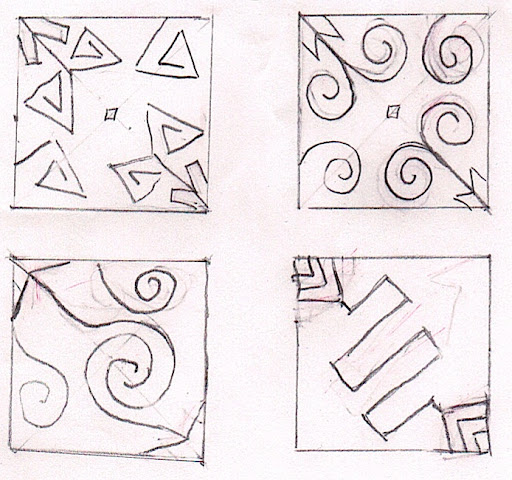
Secondly, someone asked about patterns. I don’t have any charts or outline designs, and couldn’t find any online or even any books on the topic (doesn’t mean they aren’t out there!) However, here is a gallery of traditional Hmong motifs for textiles worked in various techniques from UC Irvine. It’s a great source of inspiration for geometric designs.   Also, I did some very rough sketches this morning – you really only have to draw one square. The rest of the design is just repetition. One is based on the design in the photo, the others are just playing around with ideas. Anyway, if y’all end up doing some embroidery with this, I’d love to see photos!


Posted in Embroidery around the world | Tagged , , , | Leave a comment

Japanese thimbles

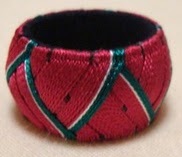
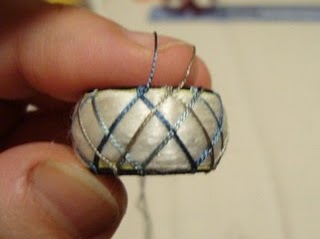
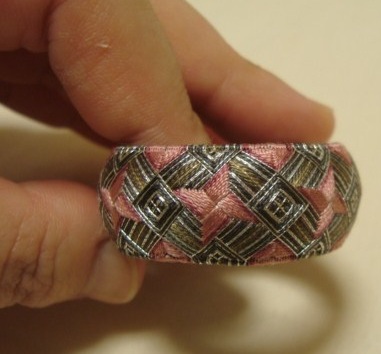
This post is about handmade Japanese thimbles (like the one with the watermelon design)! Apparently, Japanese thimbles are rings instead of the shape I’m used to. Ma Mercerie by Chloe Patricia is a blog about all the ways you can make these thimbles with silk over a ring-shaped base (or make anything else that’s a ring, like the base for a pincushion and napkin rings). She also has detailed instructions on how to make them, sells them if you’d rather just buy one, and sells kits to get you started.

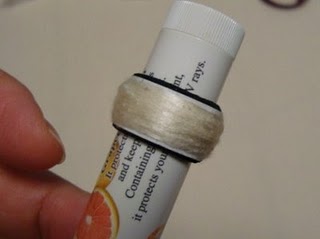
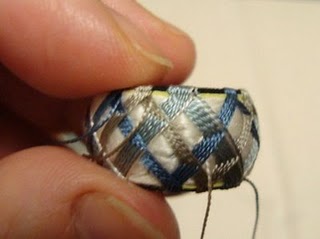
Now, I know y’all want to know how to make them! First, you make a base. Then you wrap the base in silk thread. There are additional details in the rest of the posts in the “How I  make my thimbles” section. It’s actually fairly straightforward -you mostly have to keep track of the threads you are wrapping and keep the wrapping angle right for the pattern you are doing.

OK, here are a few more finished pieces (these two are pincushion bases):

Chloe Patricia runs a monthly thimble-making contest, where you can win a thimble from her. This means there’s a Flickr gallery with over a hundred photos of these lovely thimbles made by people all over the world. I had a lot of fun looking them all over.

Posted in Japanese embroidery, tutorials | Tagged , , , | 11 Comments

Chinese embroidery: 100 children playing

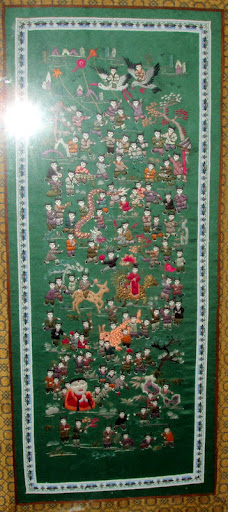
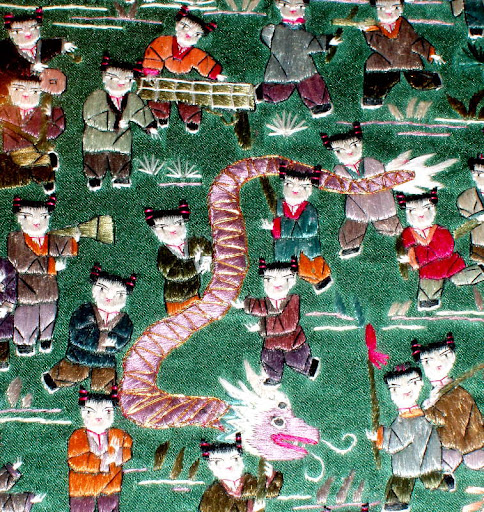
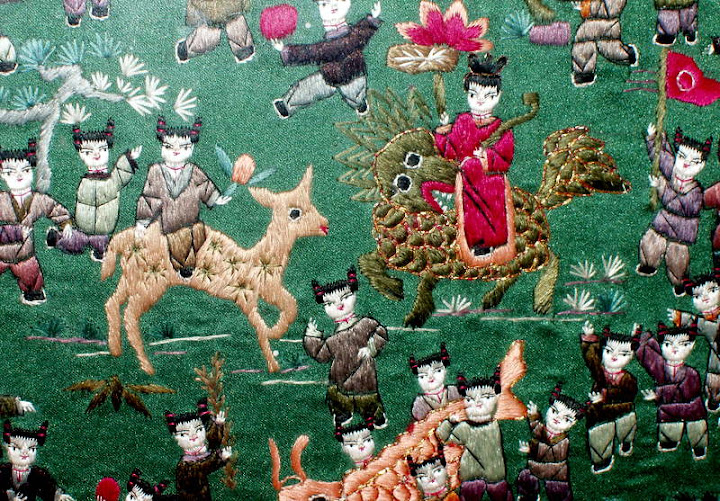
This is a Chinese embroidery depicting the Buddha and 100 children playing. My mother told me she counted once, and there were indeed 100 children. I tried to double check, but I kept losing track so I’m just going to trust her.  This embroidery is given to married couples – the design of 100 children playing is good luck for a growing family. Here’s a close-up (the children are all carefully embroidered doing all kinds of different things).
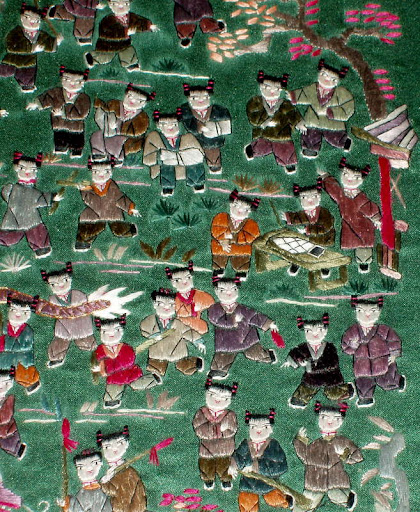
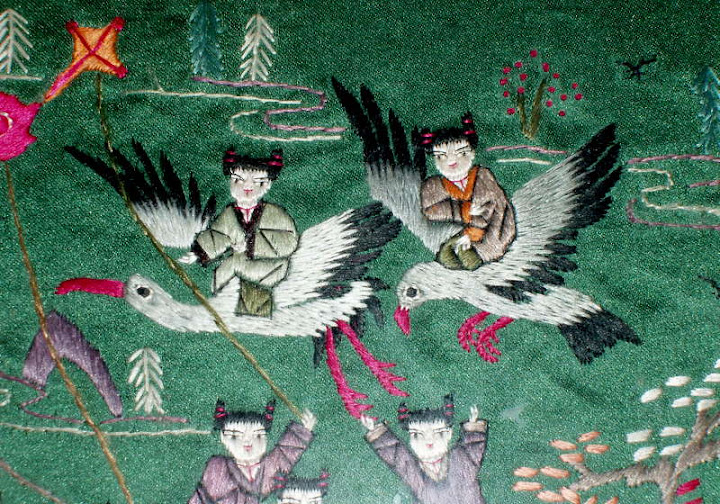
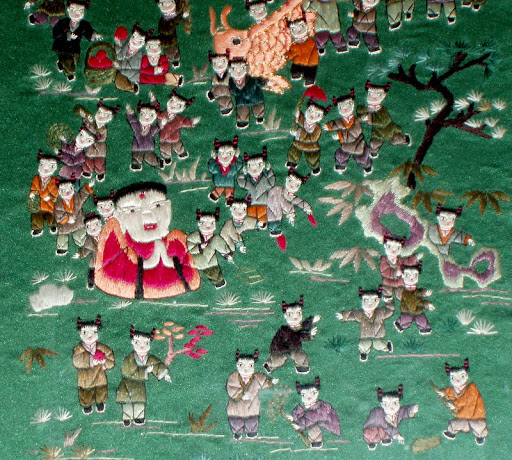
I couldn’t get a good photograph of the whole thing, so I’m including lots of closeups! The embroidery contains a lot of Chinese symbolism. For example, pine trees and cranes symbolize longevity. Here is a detail from around the cranes (I’m not sure if the children with kites also symbolize something, or if they are just kids playing):

Here is a closeup of the Buddha:

These kids have a dragon!

This girl is carrying a lotus and riding a dragon. She’s my favorite. One of my Chinese friends tells me that bodhisattvas ride dragons, deer, and cranes in stories. These bodhisattvas are mysterious and powerful, and these images of children riding these animals symbolize power. Lotuses are a major Buddhist symbol. So this embroidery is wishing the new family children, longevity, power, and luck.

Of course, if you are better informed than I am, I’d be delighted to hear more about the symbolism in this picture!

Posted in Embroidery around the world, Surface embroidery | Tagged | 16 Comments

Indian embroidery: Kutch work

kutch work wall hanging

Kutch work wall hanging by Ramya Ramanan, on Flickr

This is a type of embroidery from the Indian state of Gujarat, and is especially popular in the Kutch and Bhuj regions. It’s closely related to Armenian embroidery – they both use interlaced herringbone stitch. The Indian designs tend to have a different style to them than the Armenian designs, I think. There are a lot of wonderful resources on the internet for doing Kutch work – lots more than there are for Armenian embroidery!

Bhavani Harikrishnan has a beautifully illustrated tutorial on Kutch work in four lessons. Each step has both diagrams and many very clear, very nice photos showing each move with the needle. I’ve put a few of them below to inspire y’all to go check it out. (If you like video tutorials and have some time, then Mridula’s School of Embroidery has a  Kutchwork Embroidery Series on Youtube.)

Lesson 1 Part 2

Lesson 2 Part 2

Lesson 3

Lesson 4

Posted in Free resources online, Indian embroidery, tutorials | Tagged , , , , | 5 Comments

Geometric chain stitch

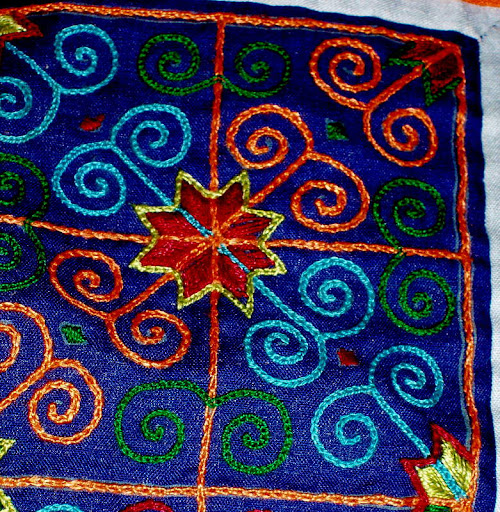
So – another post on acquisitions from Thailand. Is this Hmong or Indian or something else? I don’t know! This design is very geometric and based on spirals, like the Hmong cross-stitch designs I showed earlier. However, instead of cross-stitch, the design is in  extremely fine chain stitch (see the closeup) like the Indian embroideries. It’s a simple pattern, but the colors are very bright. I like the starbursts.

Posted in Embroidery around the world | Tagged , , , | 14 Comments

J. F. Ingalls Catalog, 1886

#162

198

You may know this already, but I thought I’d mention that there’s a free scan of an 1886 embroidery stamping catalog available online. John Governale was kind enough to scan all 255 pages in and release them to the public domain, so no copyright issues! There are tons of nice designs: lots of flowers, old timey people, pretty birds, cherubs, borders, geometric designs, phrases, just an amazing variety of different things. But it was the demented bird patterns that really caught my eye, so that’s what y’all get to see in this post. I think they’re hilarious. Someone sure had a lot of fun drawing those.

#201

# 98

# 241

# 219

Posted in Historical, patterns and designs | Tagged , , , , | 12 Comments

Indian Embroidery: Gujarati dancers

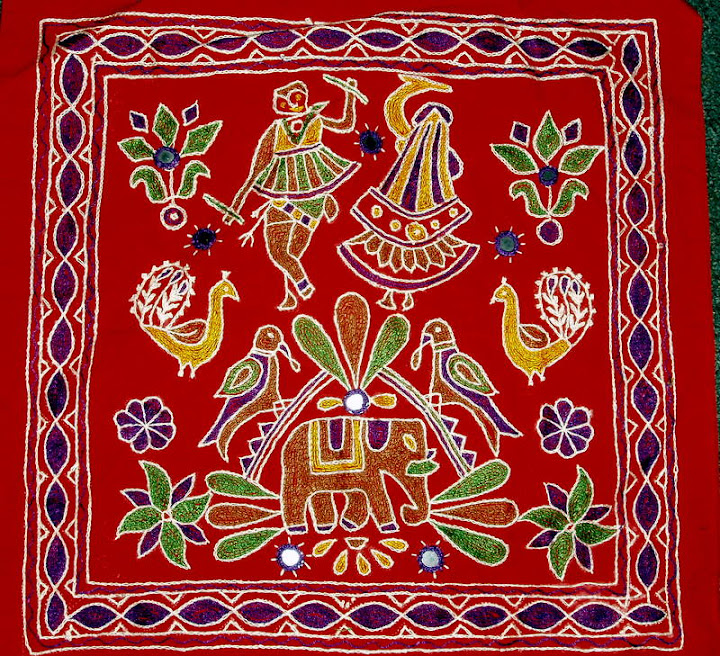
Deepa Balagopal has kindly let me know that one of the “Hmong” embroideries I posted earlier was miscategorized – the elephant design is actually an Indian design, although the cross-stitch is Hmong style. It’s long enough ago that my parents don’t recall anything more about these pieces other than they were purchased in Thailand. I don’t know if they were actually from Indian artists, or if some Hmong refugees found that Indian designs sell well. Who knows! Anyway, I have a few more Indian designs to show y’all.

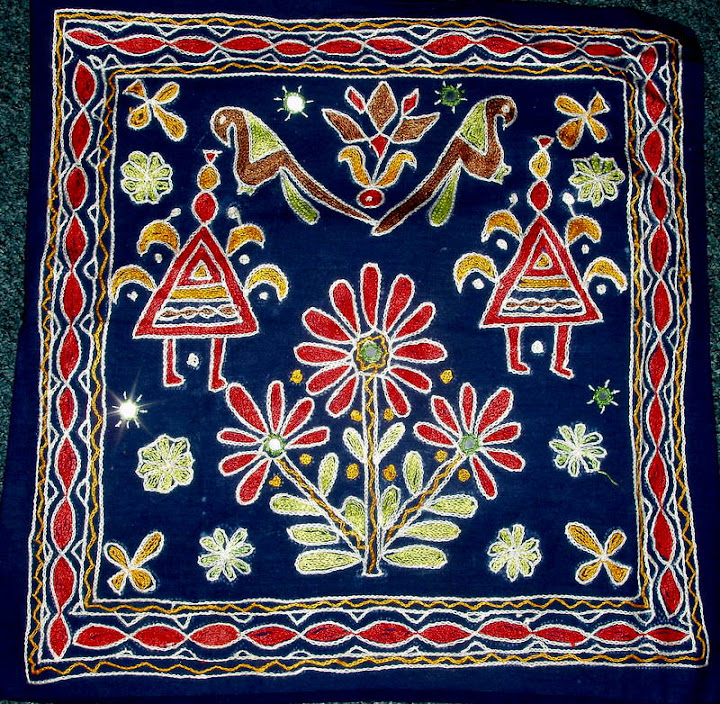
Deepa tells me the design below is definitely Indian, because the dancers depicted are clearly traditional dancers from the state of Gujarat in western India. Also, peacocks and elephants are traditional Indian symbols.

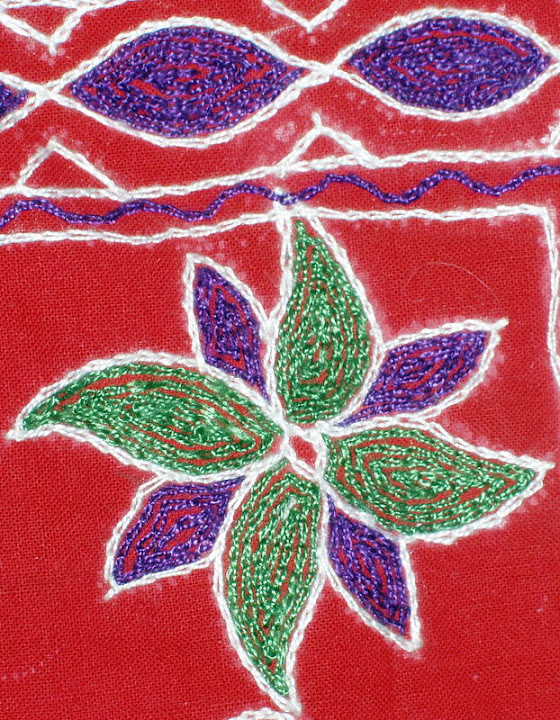
Like the elephant design, these are entirely composed of chain stitching (see the closeup!). I’ve noticed (as I’ve been working on this blog) that a lot of regional traditional embroideries seem to focus around one particular stitch and explore its possibilities. Sometimes adhering to a rule that seems like a restriction can inspire additional creativity in how the stitch is used, and it gives the embroidery a very distinct character.

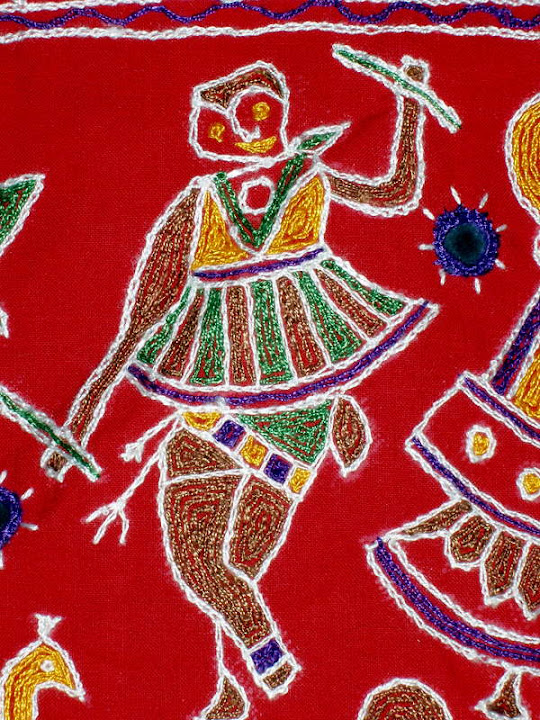
Finally, here is a closeup of one of the dancers. I love it! I want y’all to notice that you don’t really need to be able to draw realistically to design your own patterns! We all recognize this as a dancer, and we all recognize the birds and elephants in the earlier pictures. If you deliberately incorporate your style of drawing into your design decisions, it is an artistic choice and not a mistake. It gives the work a unique style.

Posted in Embroidery around the world, Indian embroidery | Tagged , , , , , , | 4 Comments

Silk Ribbon embroidery tutorials

NOTE: Unfortunately the original blog disappeared 😦 The website is no more. So I removed the links.

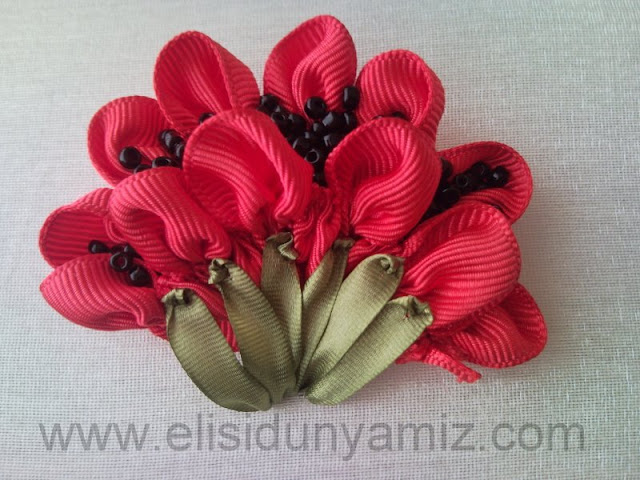
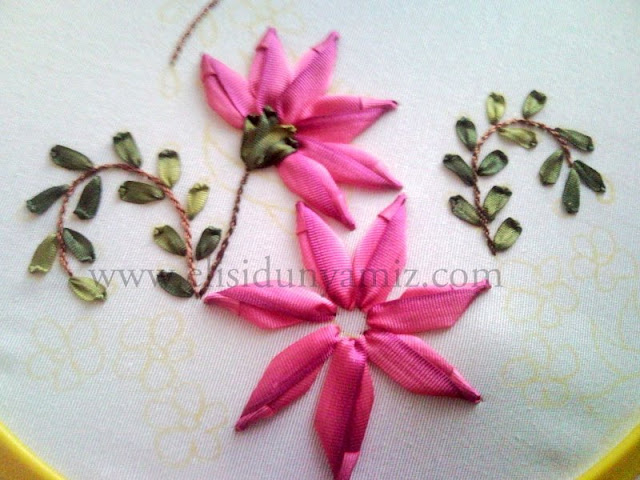
I’d like to introduce y’all to a Turkish blog with some seriously beautiful silk ribbon embroidery tutorials and needlework. (Some of them are even translated already!) Elisi Dunyamiz has an entire section of tutorials with lots of pictures, some of which are available in English. The tutorial for the poppy to the left, though, is only in Turkish (Google translation to English). Every picture here is the result of one of her tutorials, and I have linked each photo directly to the tutorial page, so just click if you want to learn it. If, on the other hand, you just want to look at photo after photo of topnotch beautiful silk ribbon embroidery, you can go to her Silk Ribbon Embroidery Samples section (Google translation to English). Maybe one of these days I should try to do some myself; silk ribbon sure makes some really beautiful pieces.

Posted in Free resources online, Silk ribbon embroidery, tutorials | Tagged , , , | 17 Comments